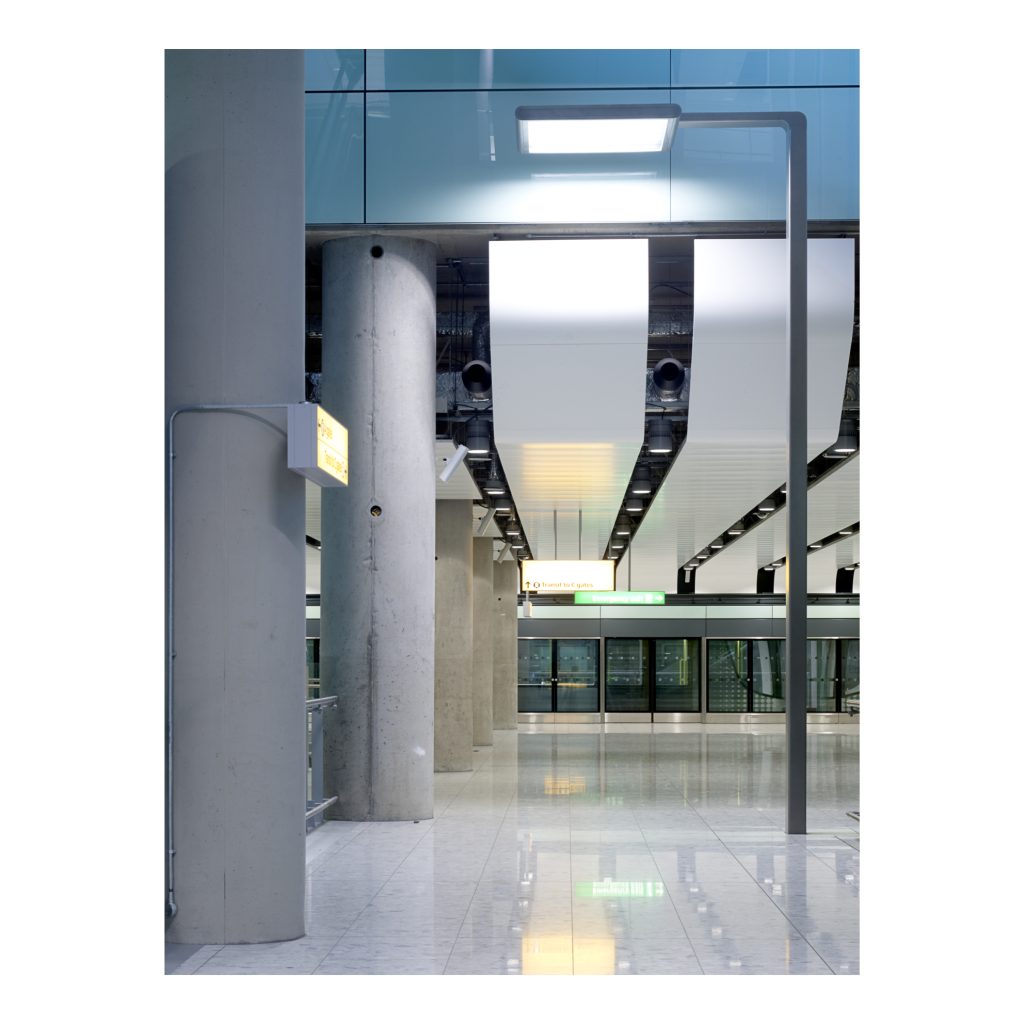
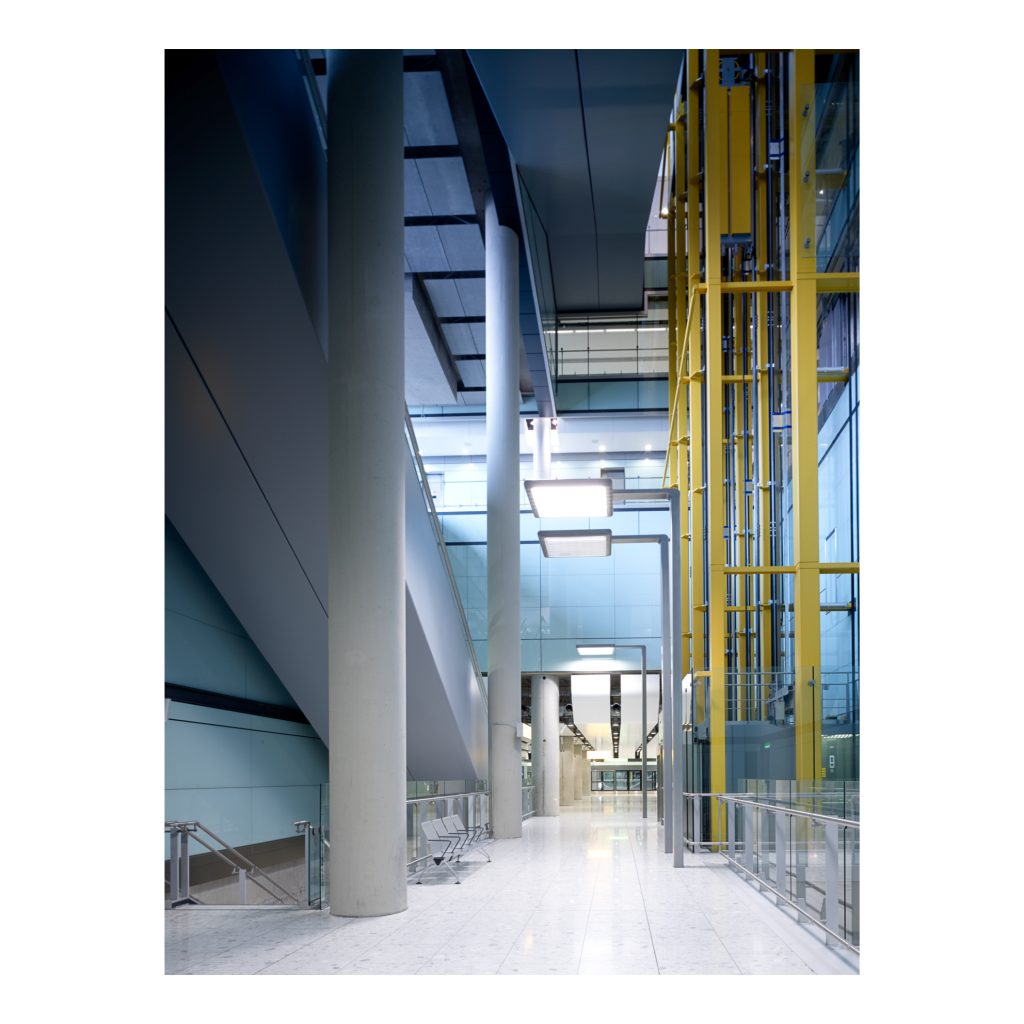
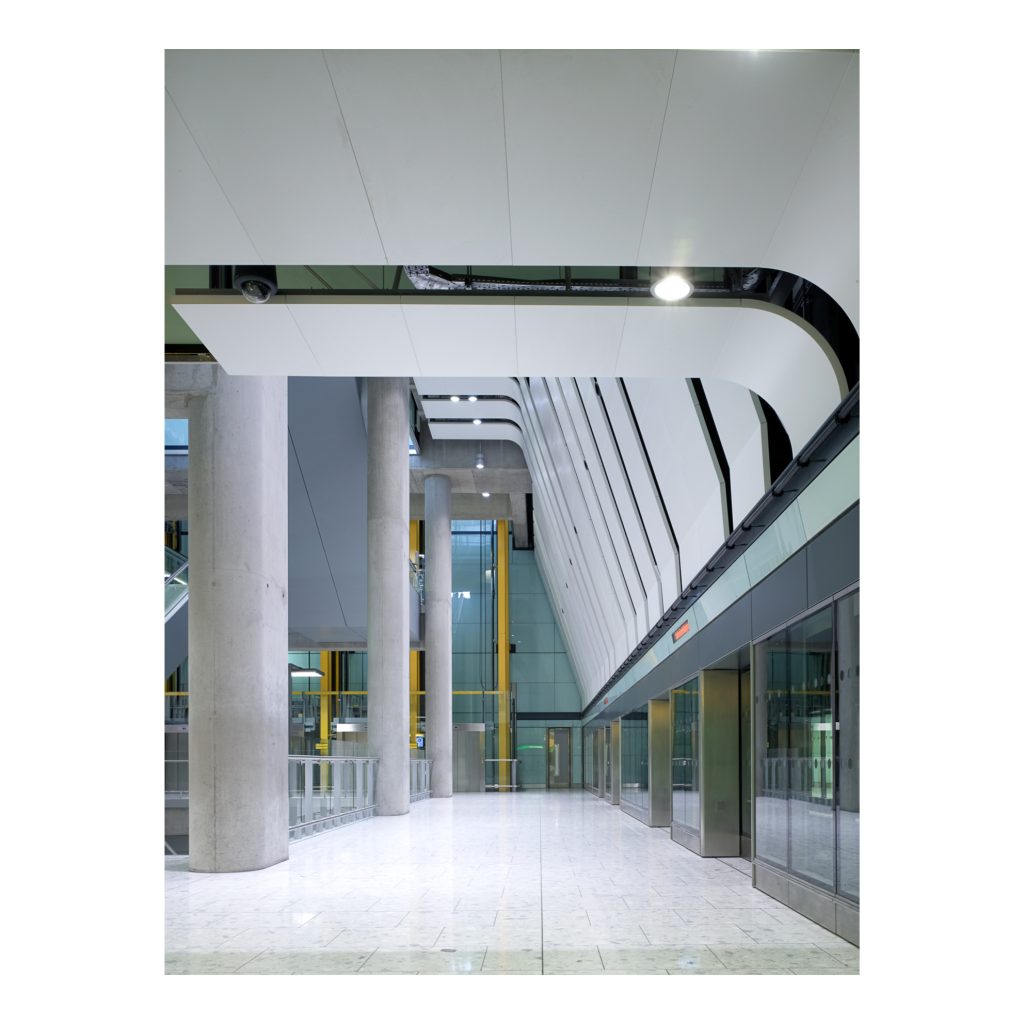
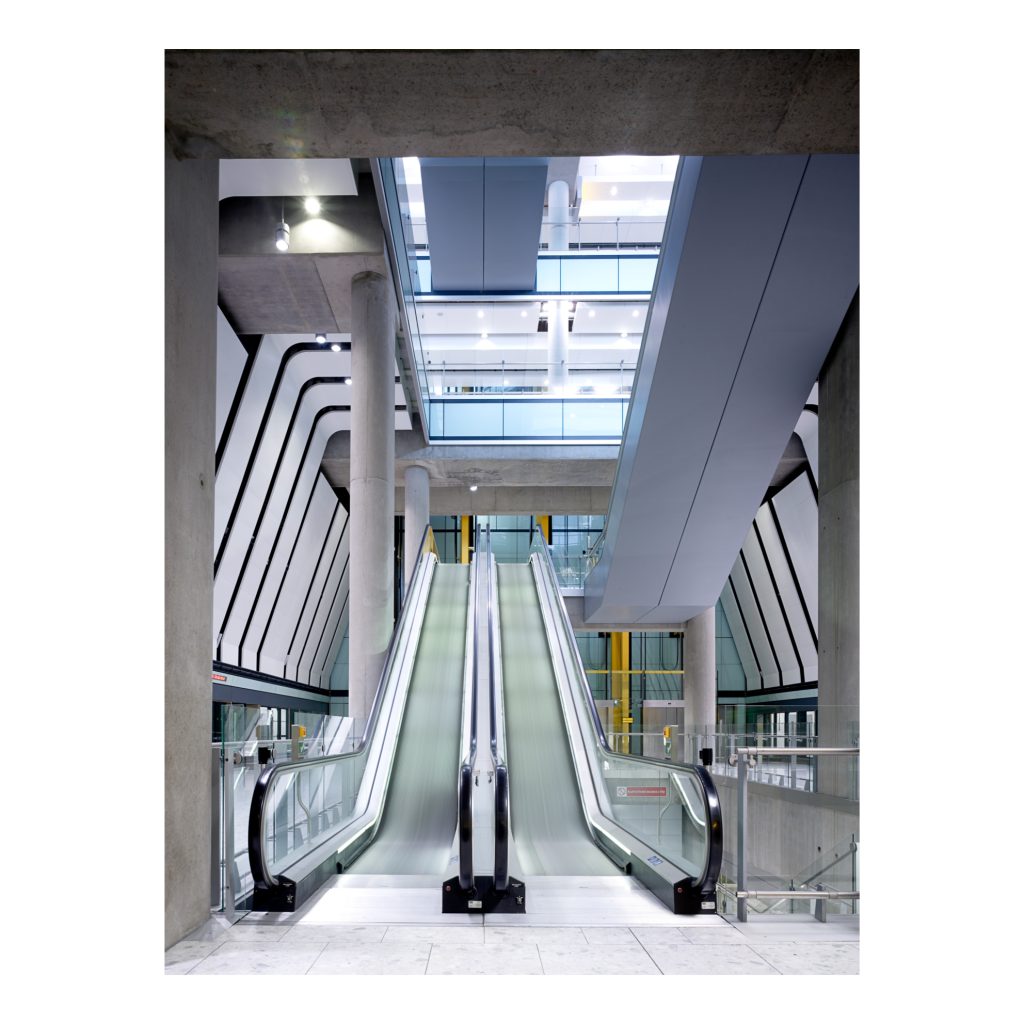
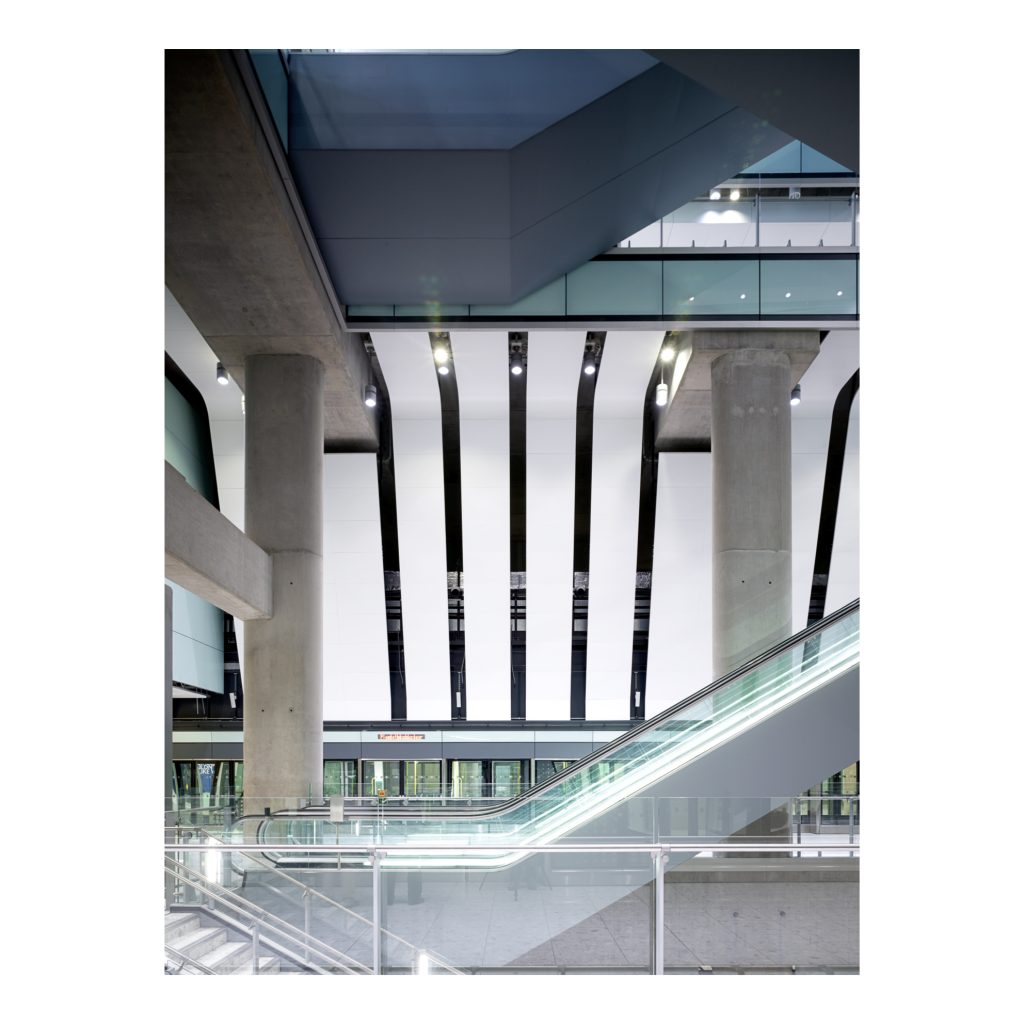
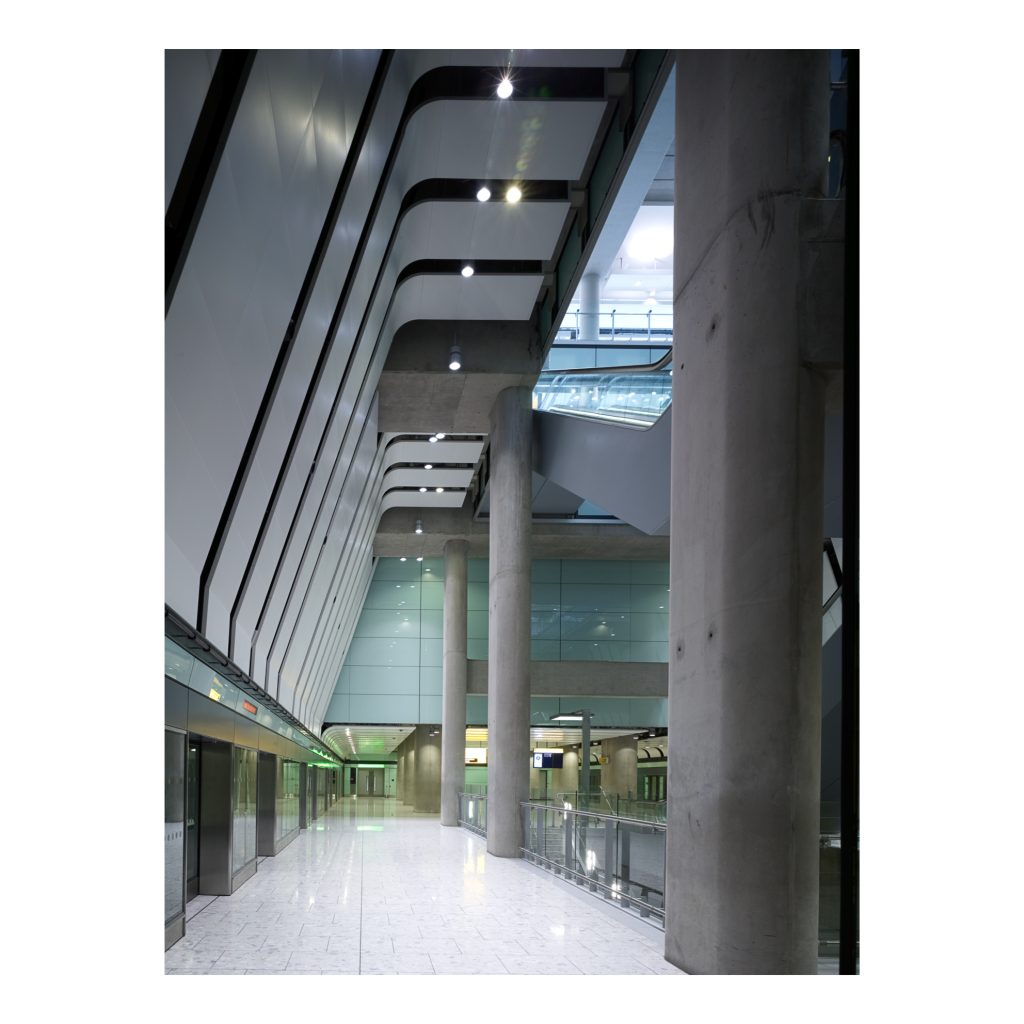
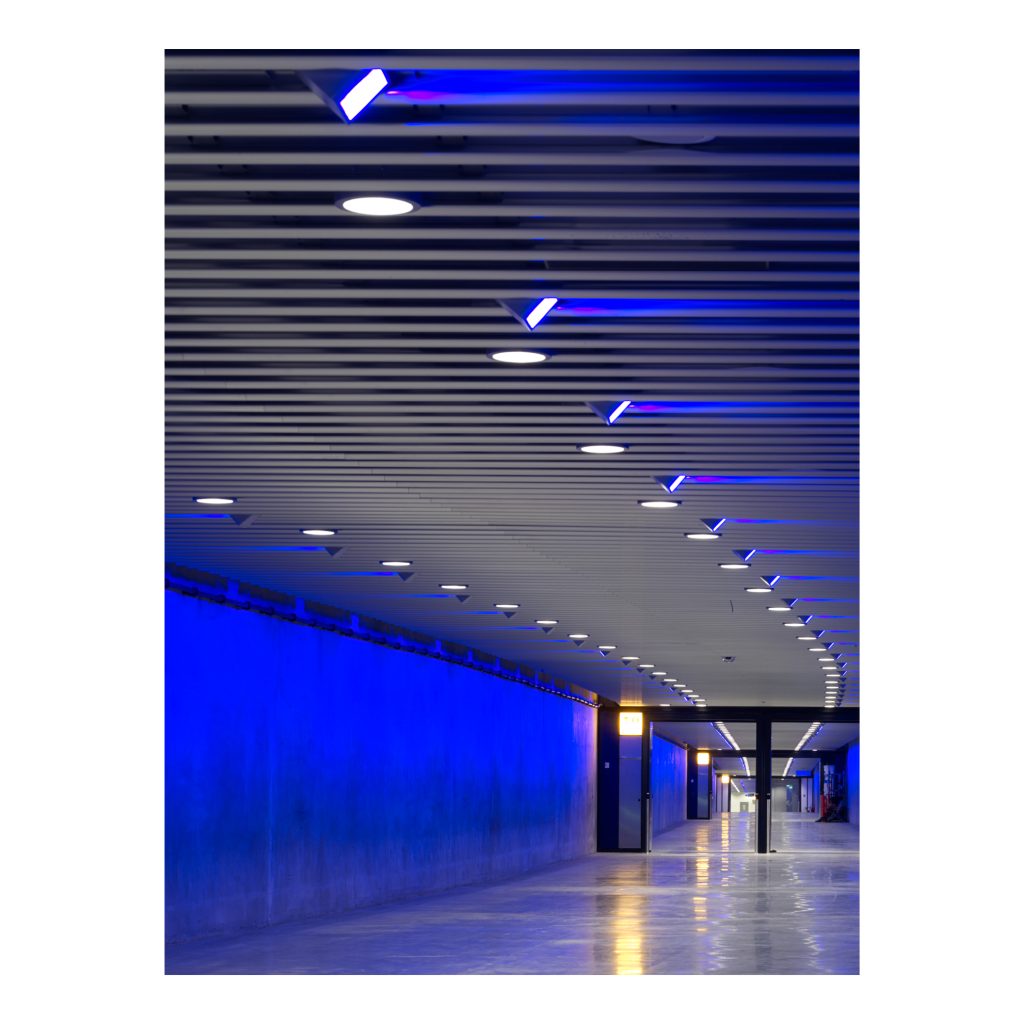
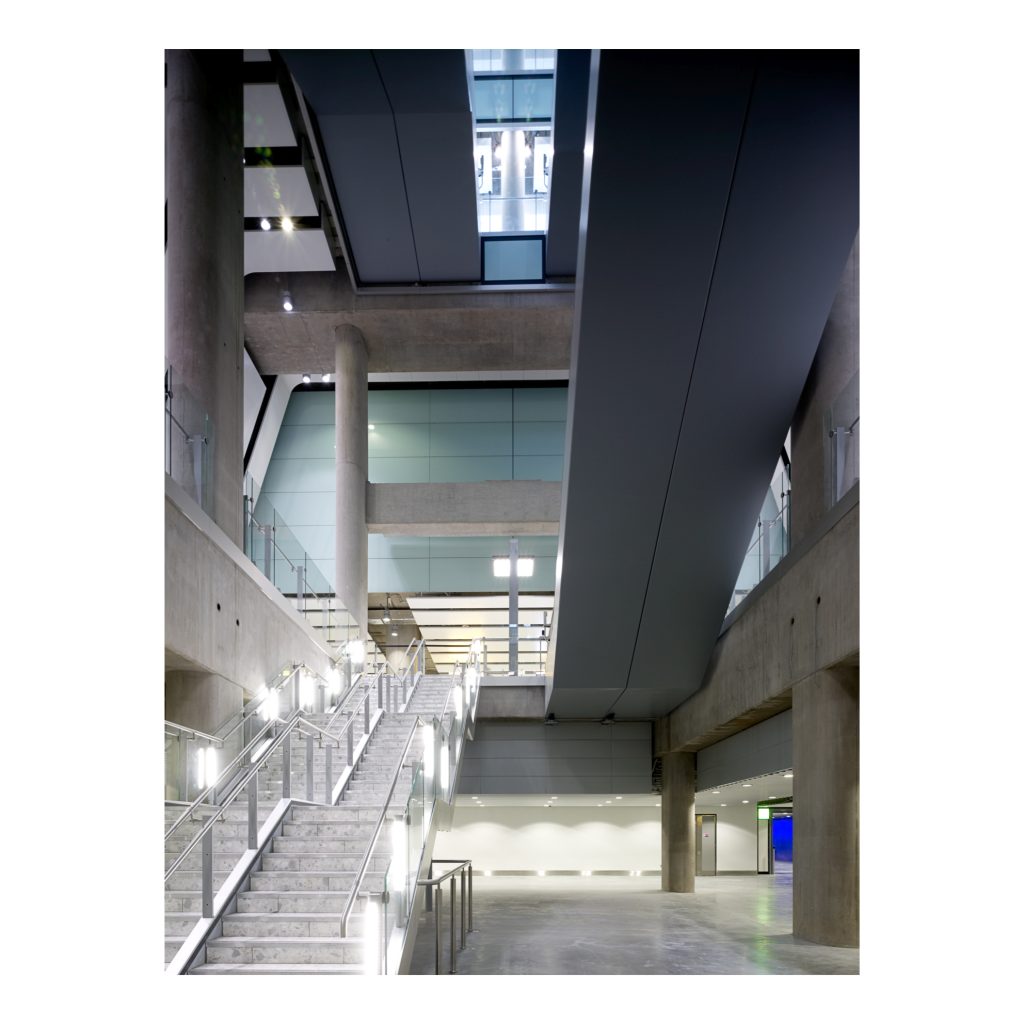
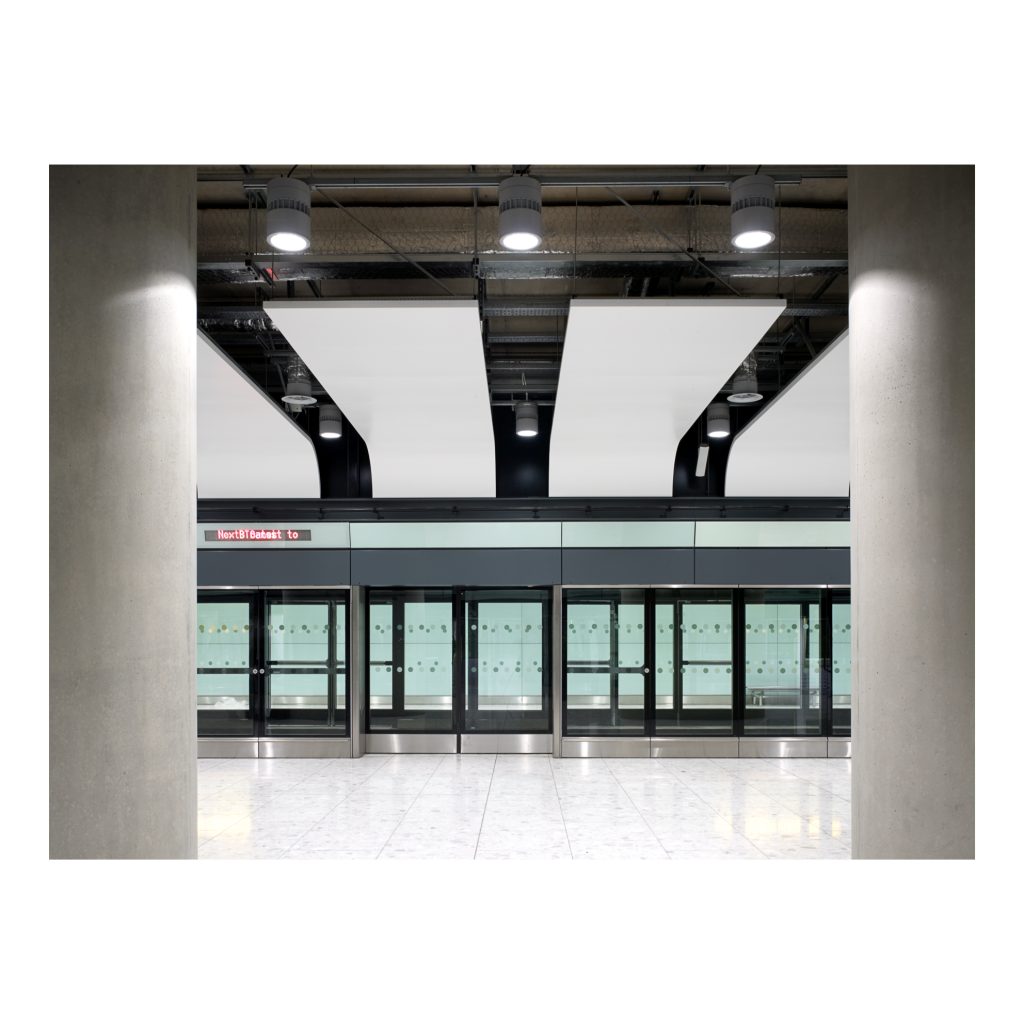
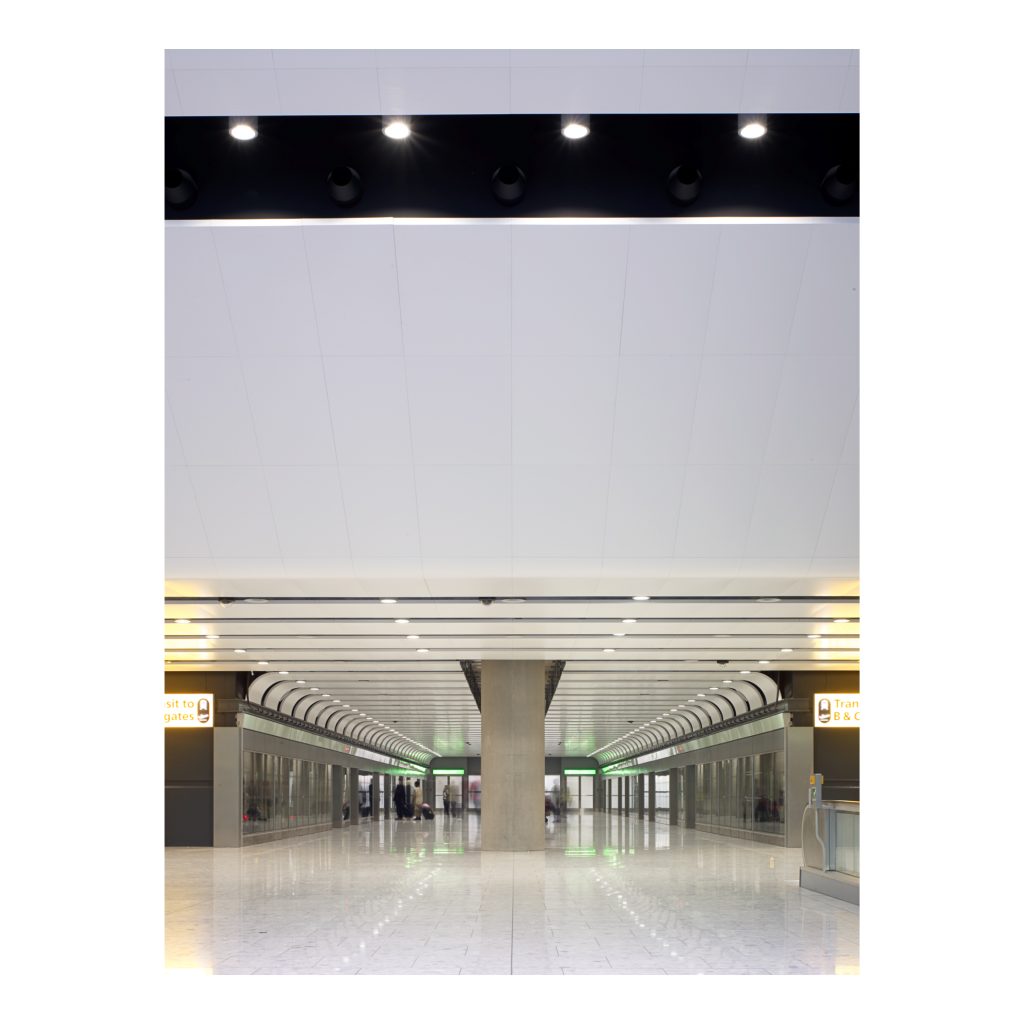
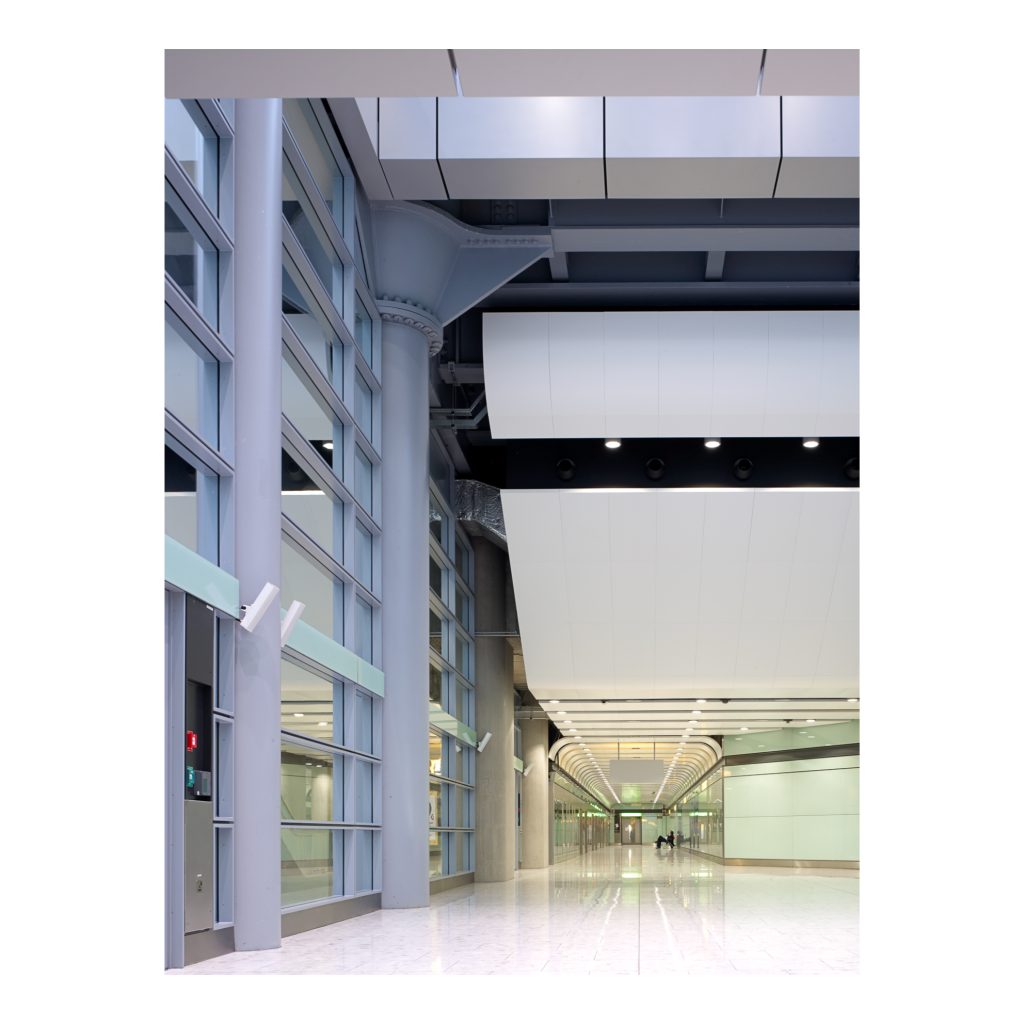
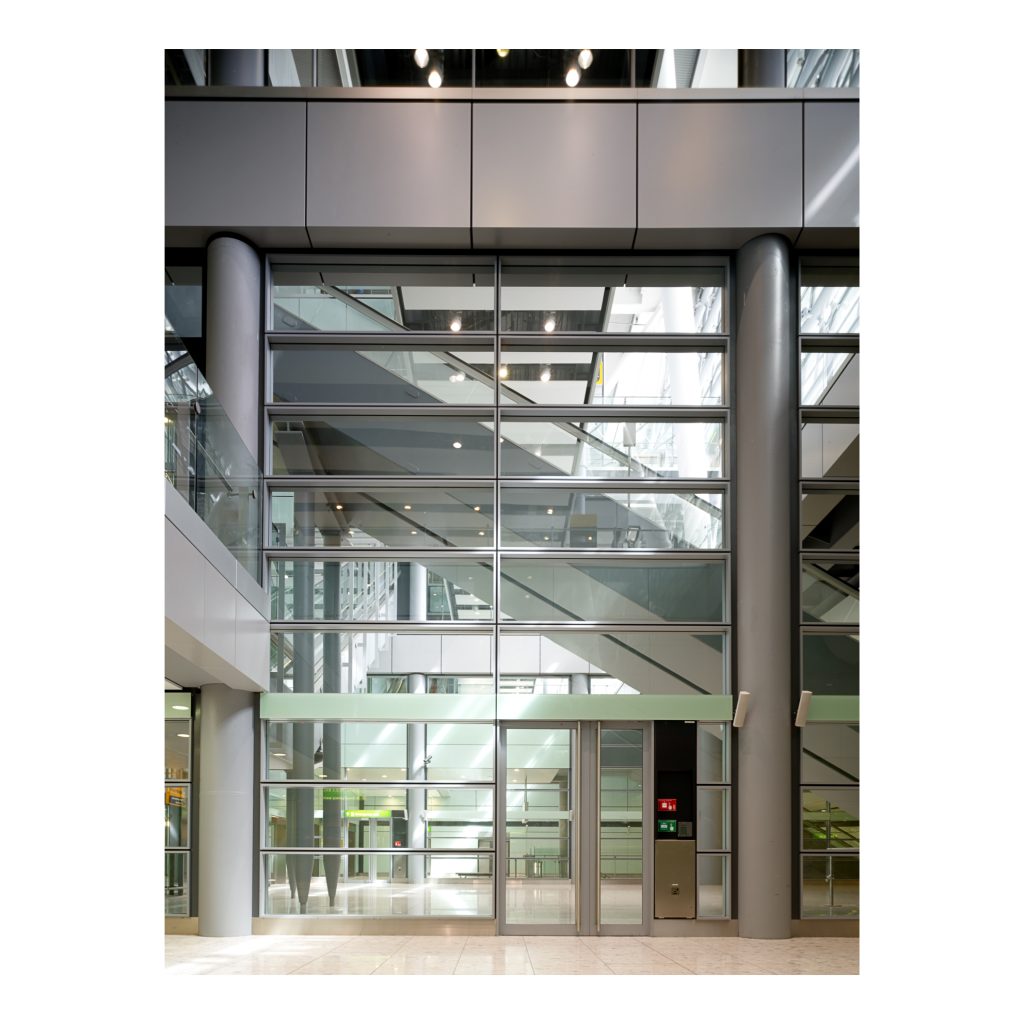
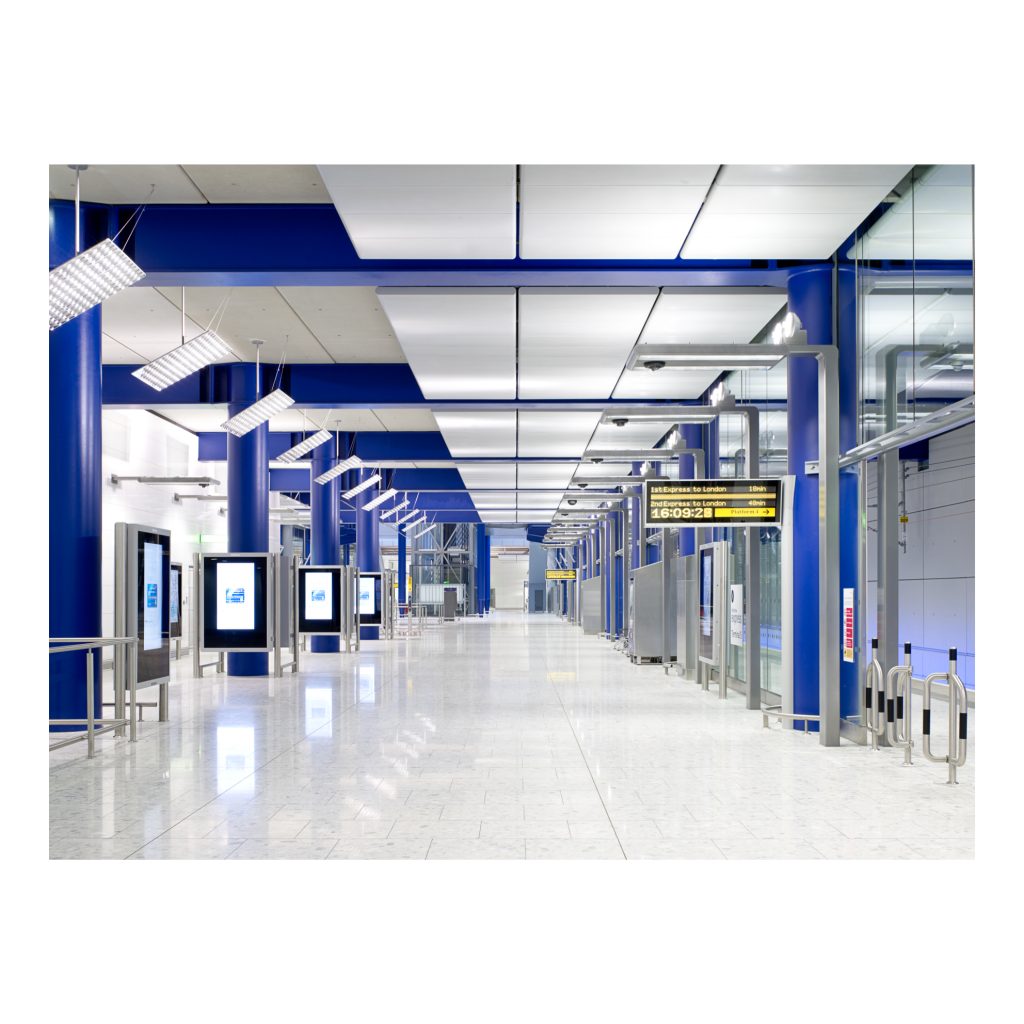
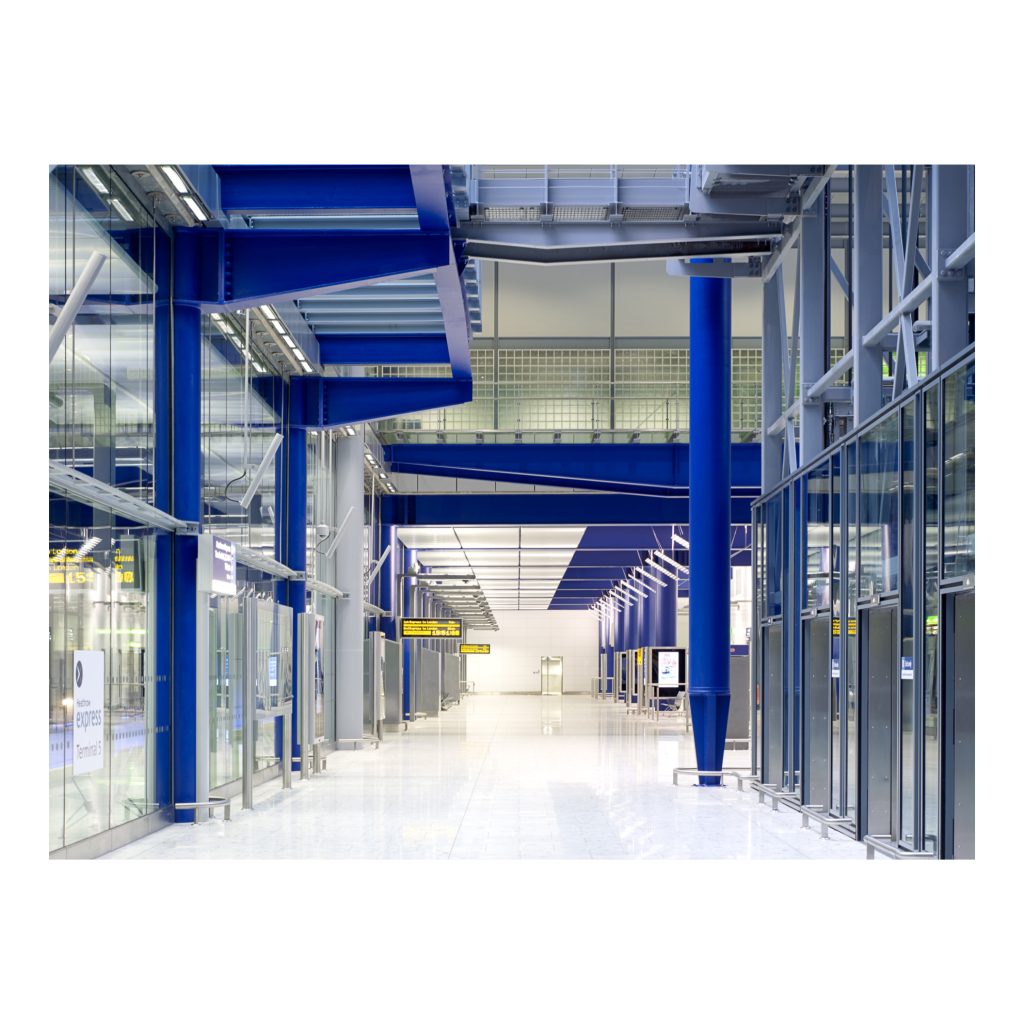
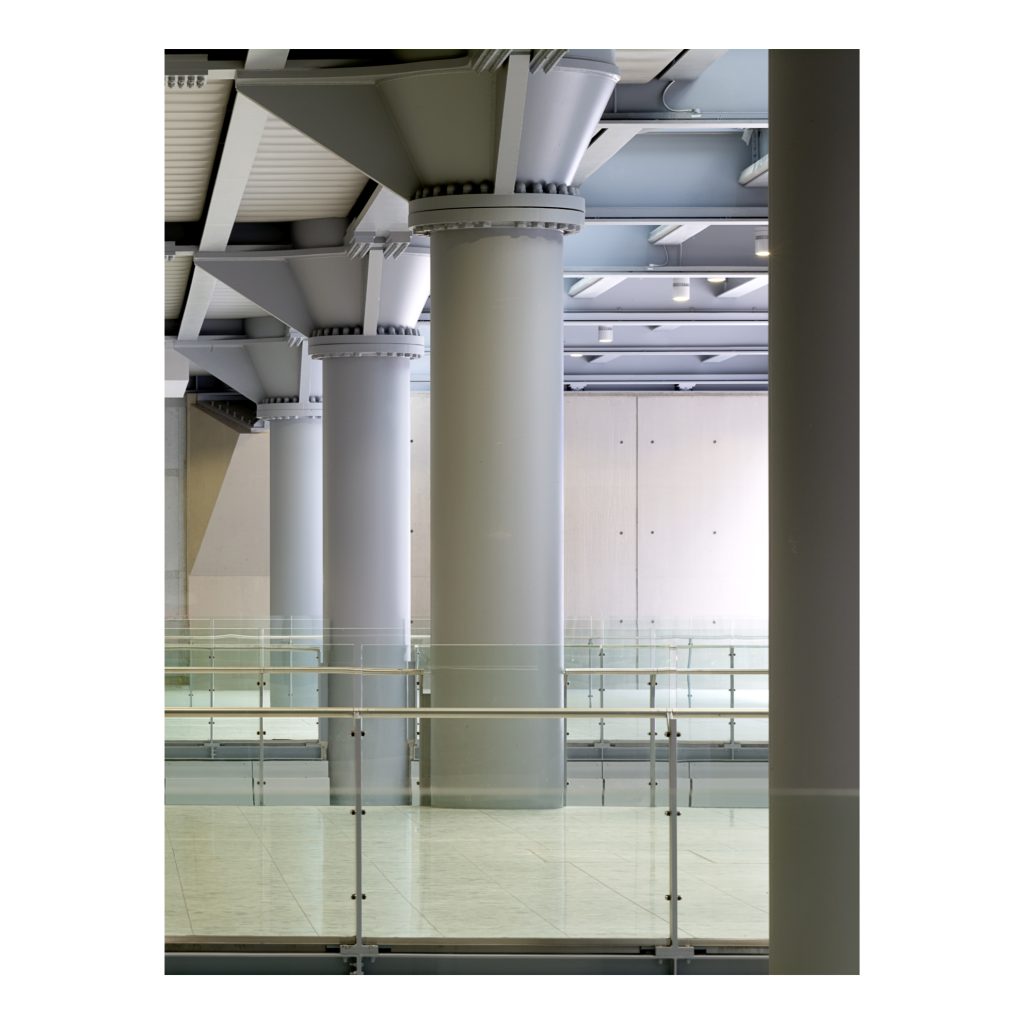
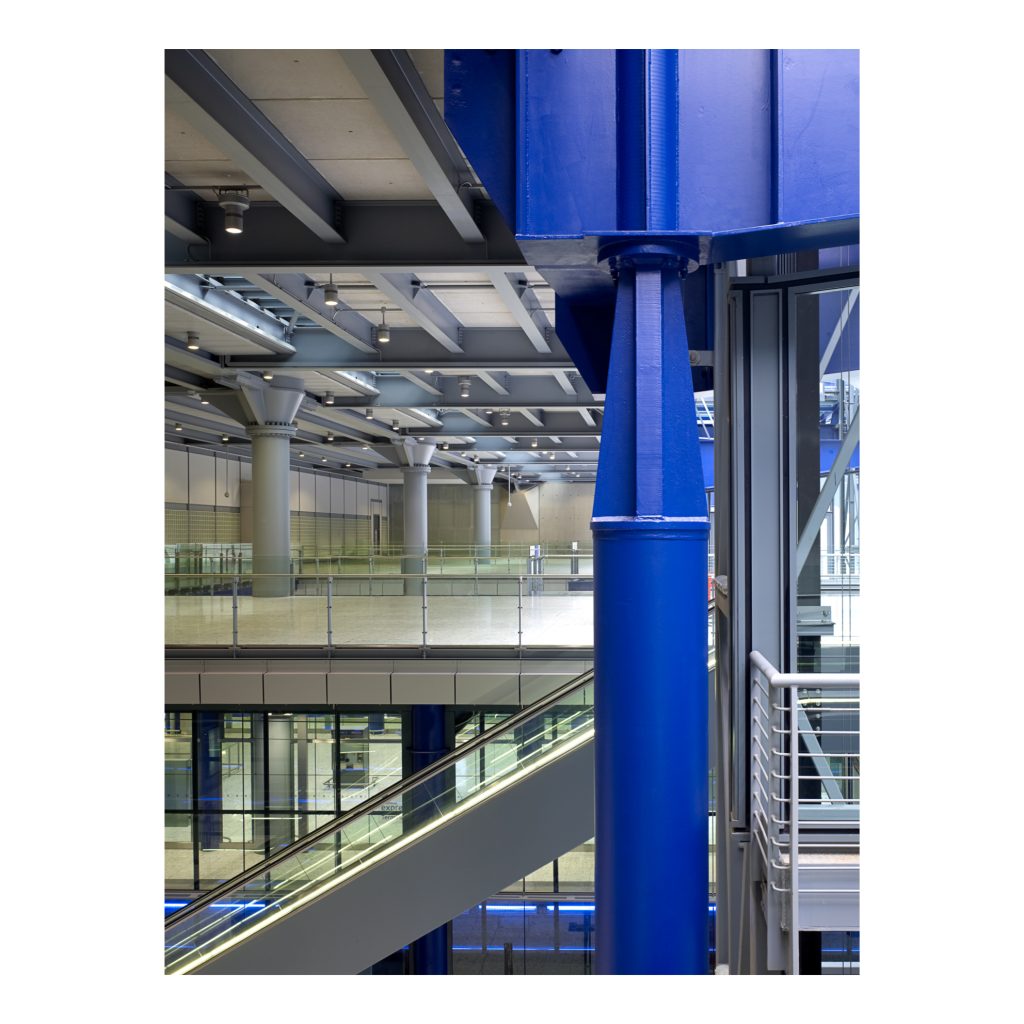
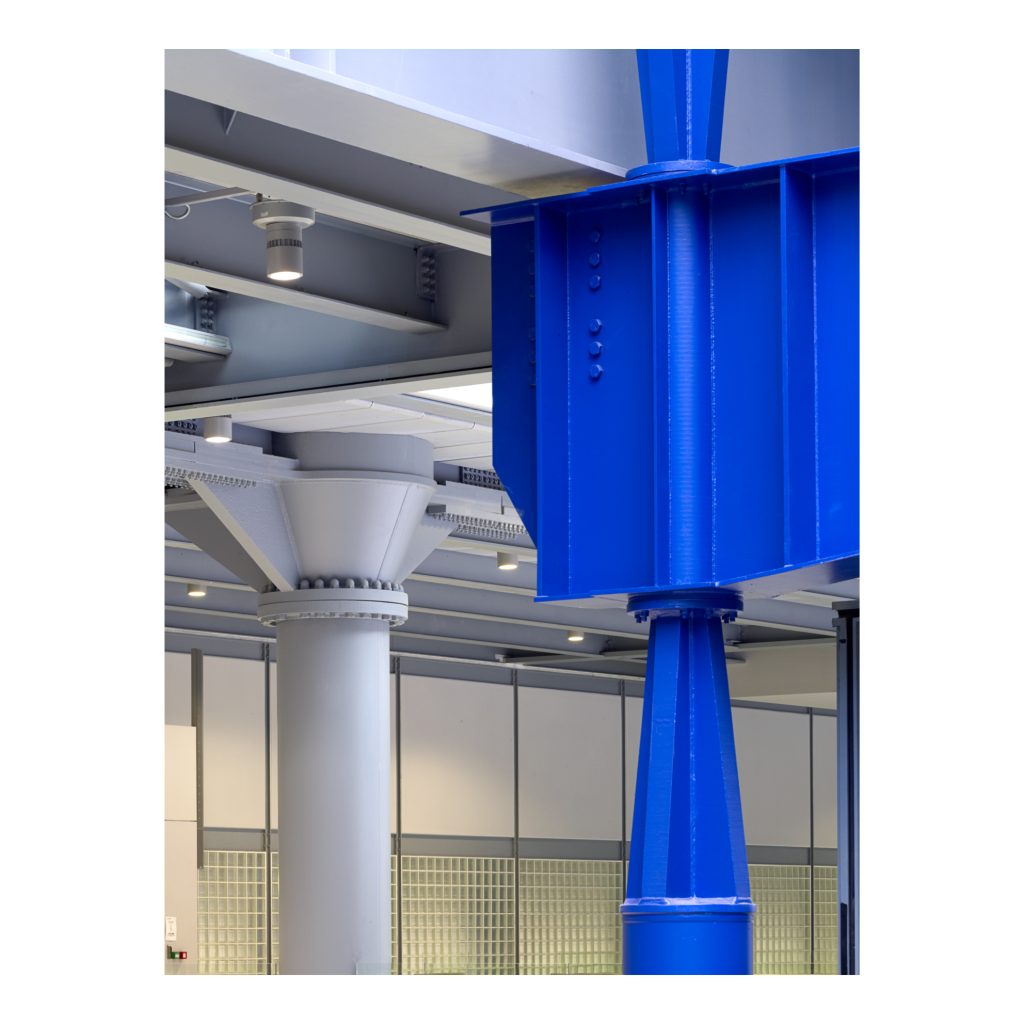
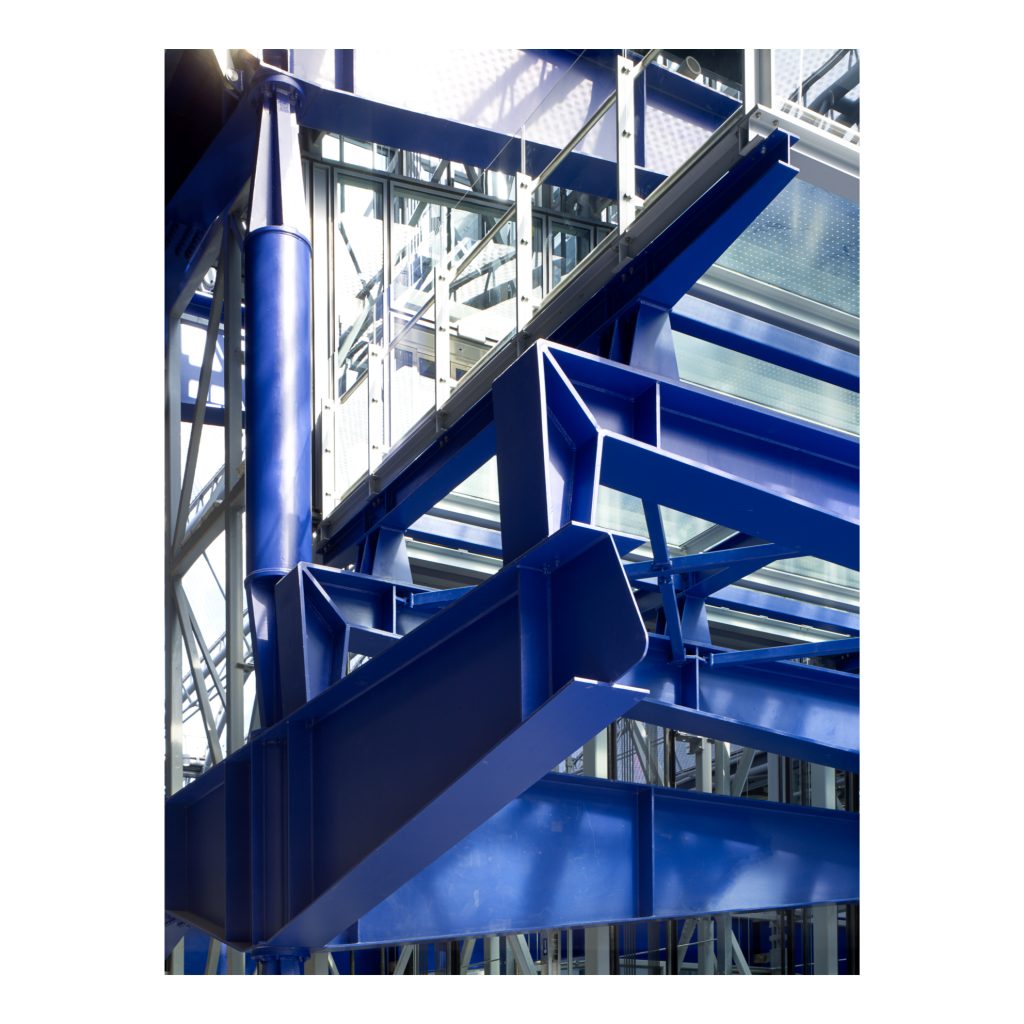
To photograph a building that exists largely underground is to enter a paradox. Daylight is absent, yet the photographic imperative is to reveal. The camera searches for what the eye perceives, translating artificially lit steel and concrete into something articulate, coherent, perhaps even radiant. These are not the usual conditions of architectural photography where daylight and context are collaborators. Instead, the subject is shadow, mass, containment, the disorienting proportions of space that is cut from earth rather than raised into air.
In the case of Heathrow’s subterranean interchange and transit system, the challenge is heightened by scale. The dimensions of steel are immense, engineered to support the movement of millions, yet they appear almost invisible to the passenger who experiences only clarity and flow. To photograph these structures is to make that latent grandeur visible, to allow the eye to rest on the rhythm of columns, the depth of a platform, the sweep of escalators disappearing upward toward light. Here, the act of framing is an act of excavation.
There is a cathedral like quality in these spaces, not only in volume but in the way light is rationed. Vertical shafts act as clerestories, guiding natural illumination down through layers of structure, emphasizing ascent and descent. Passengers are drawn upward toward the glass and sky, or downward into the mystery of the platforms. The experience recalls the spiritual drama of medieval naves where verticality and shadow conjure awe. Yet unlike the cathedral, these places carry no ornament. They are rigorous, pared back, defined by the need for legibility and movement.
Photographing them demands an attentiveness to both the monumental and the human. The camera must acknowledge the complex logic of the construction while inferring scale, abstraction as a moderator of ambition. With it, the vastness becomes legible.
There is also something older, more enigmatic, in these spaces. To stand in the interchange is to sense a kinship with the subterranean chambers of prehistory, ceremonial earthworks where the act of entering darkness was itself part of the ritual. In both, the human body negotiates a sequence of thresholds, guided by light from above. The photograph evokes this mystery without sentiment, allowing the stone, steel, and void to speak for themselves.
The work is demanding because it resists the conventions of architectural representation. There are no elevations to catch the glow of evening sun, no skyline to silhouette, no façade to stand back from. Instead the photographer steps inside the body of the building, allowing the image to be shaped by interior depth, by the balance of shadow and light, by the sheer mass of construction. It is an act of translation, but also of recognition: these hidden infrastructures are among the true cathedrals of our age.