There’s something quietly heroic about Bristol’s Floating Harbour, its calm surface disguising the audacity of its 19th-century origins. Engineered into being by sheer necessity, the harbour turned a treacherously tidal river into a perpetual harbour, allowing ships to rest, to load, to trade. It was a move of technical brilliance and civic self-belief. That same spirit; of invention, confidence, and purpose, is being rediscovered today in the redevelopment of a once-overlooked patch of land beside Temple Way.
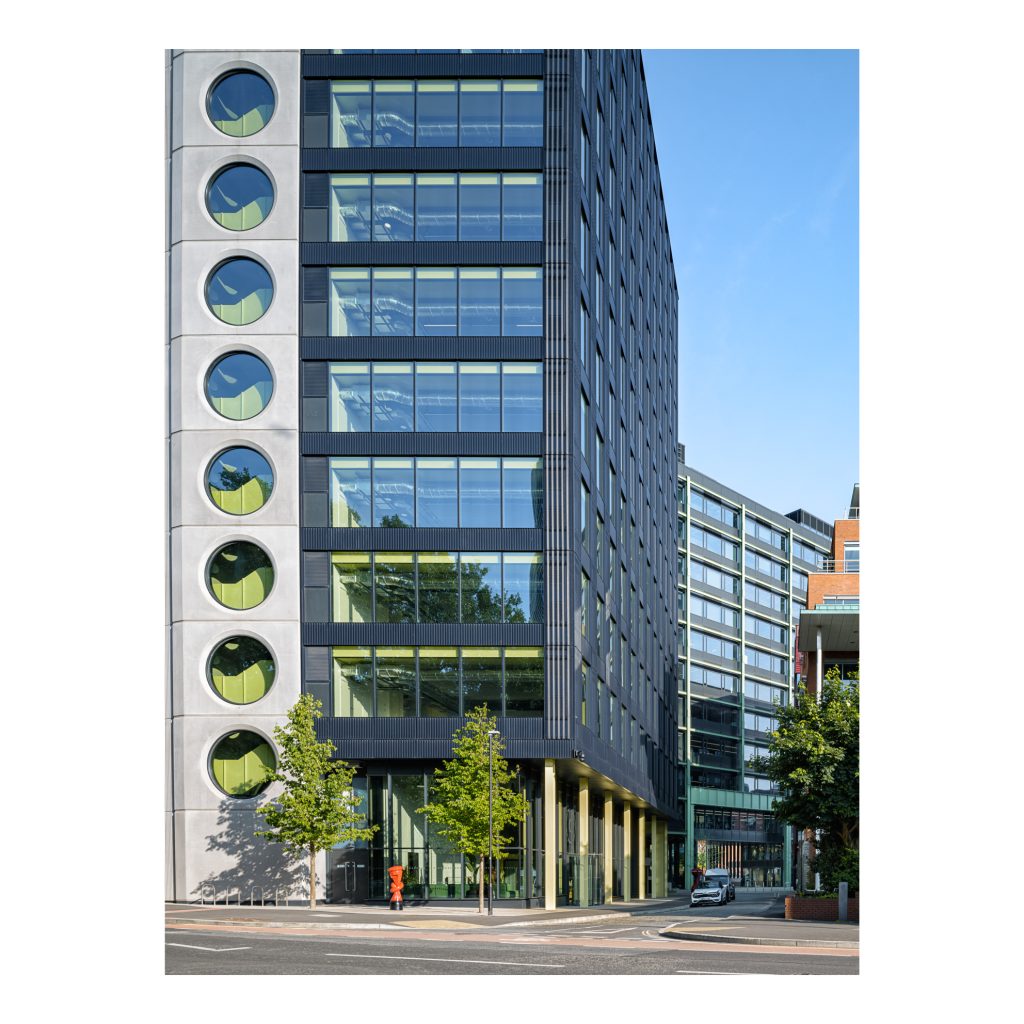
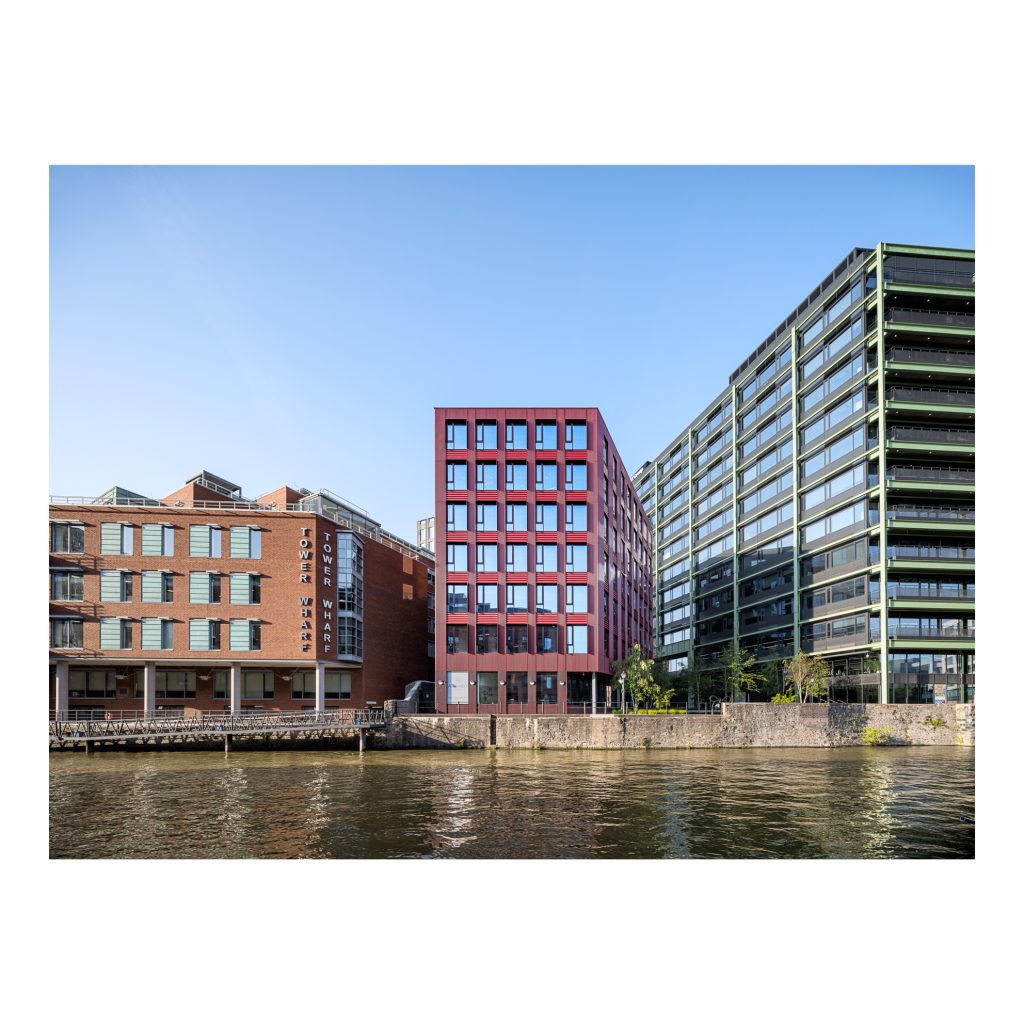
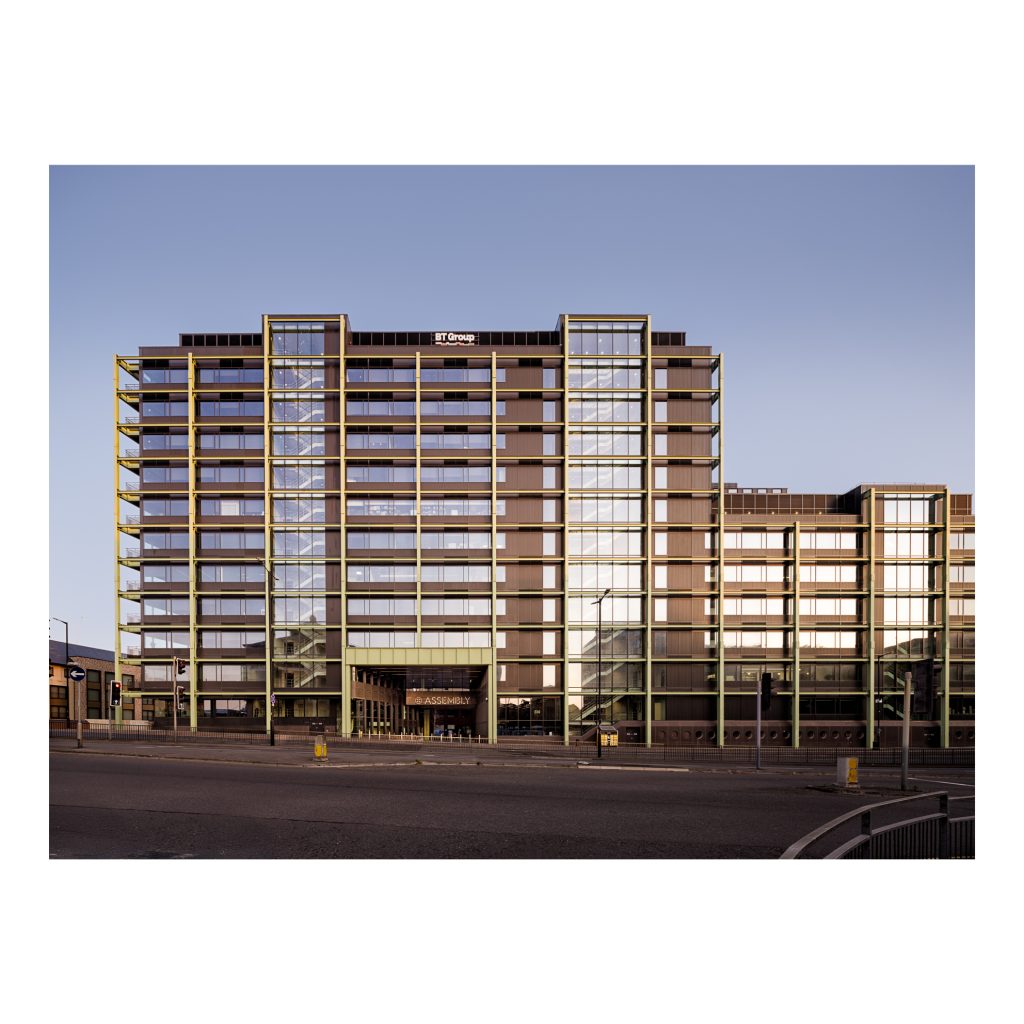
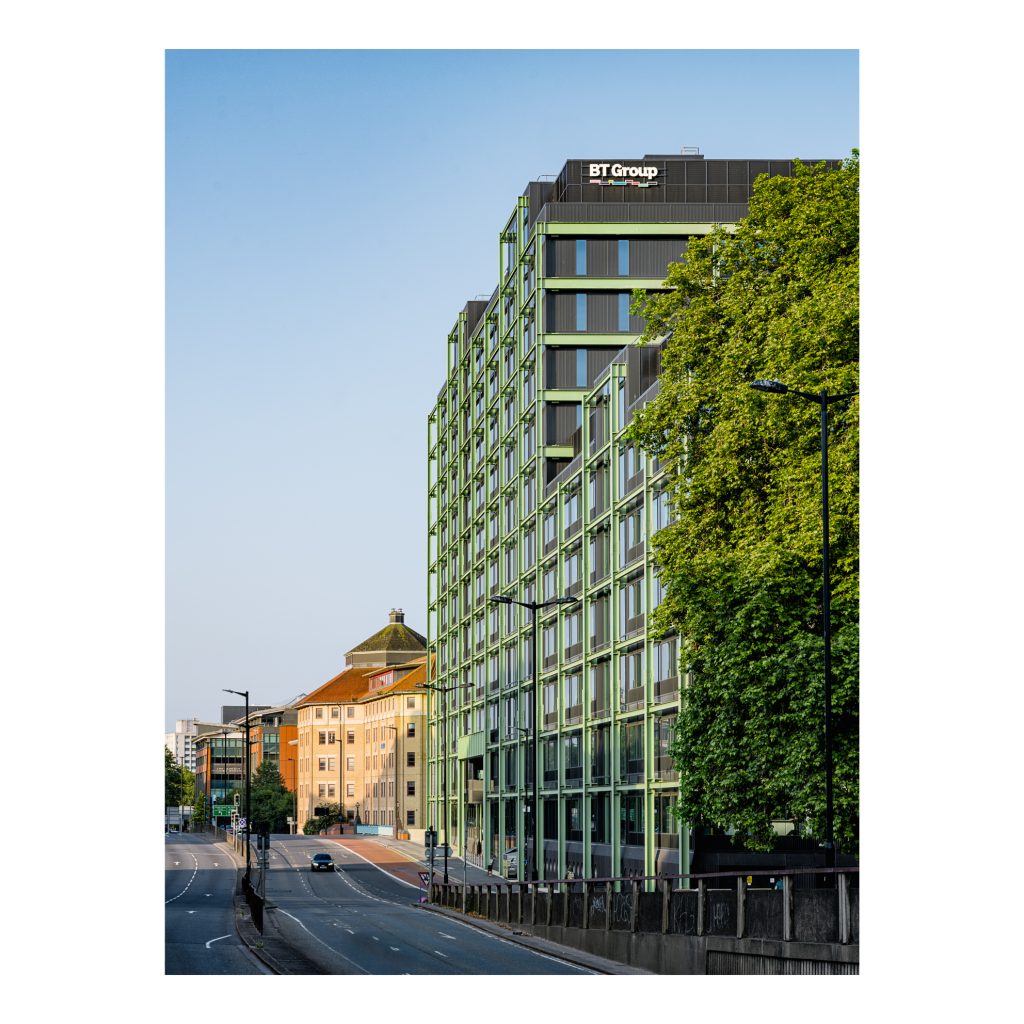
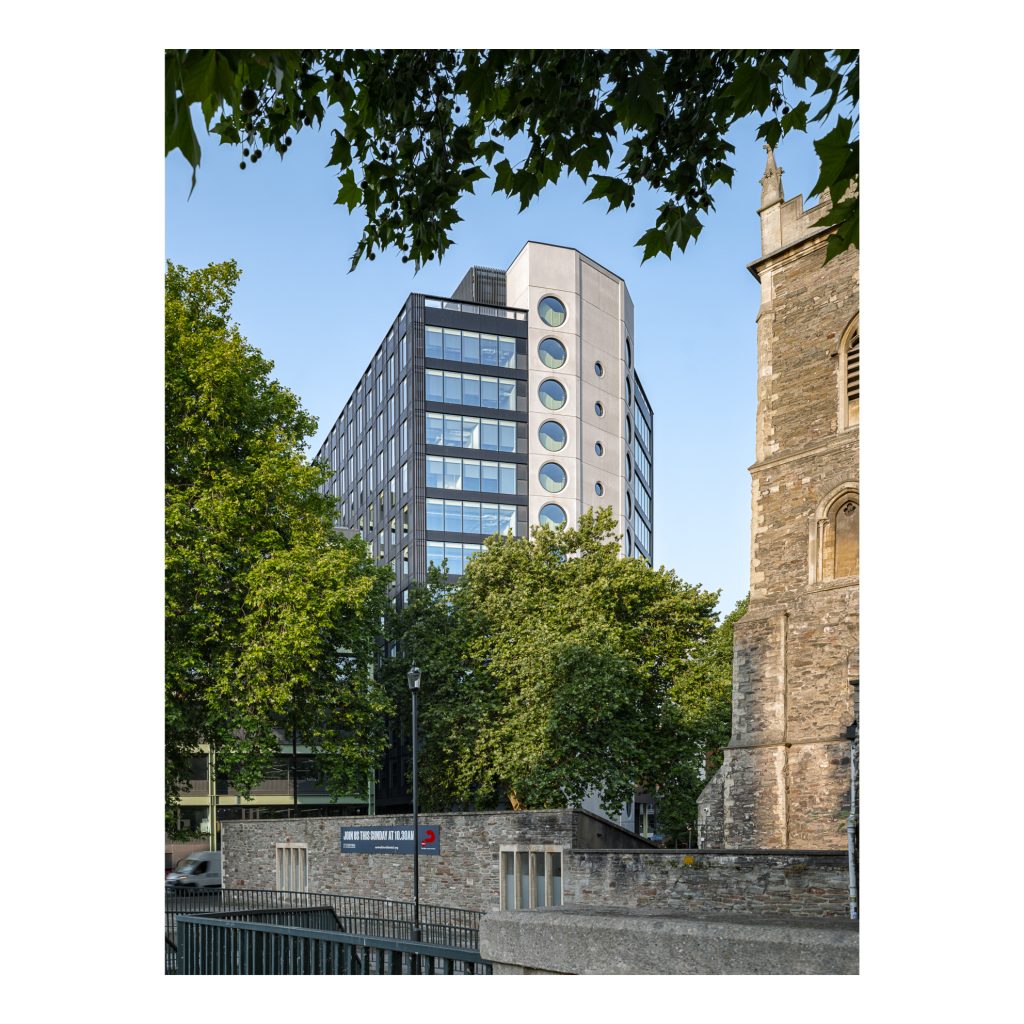
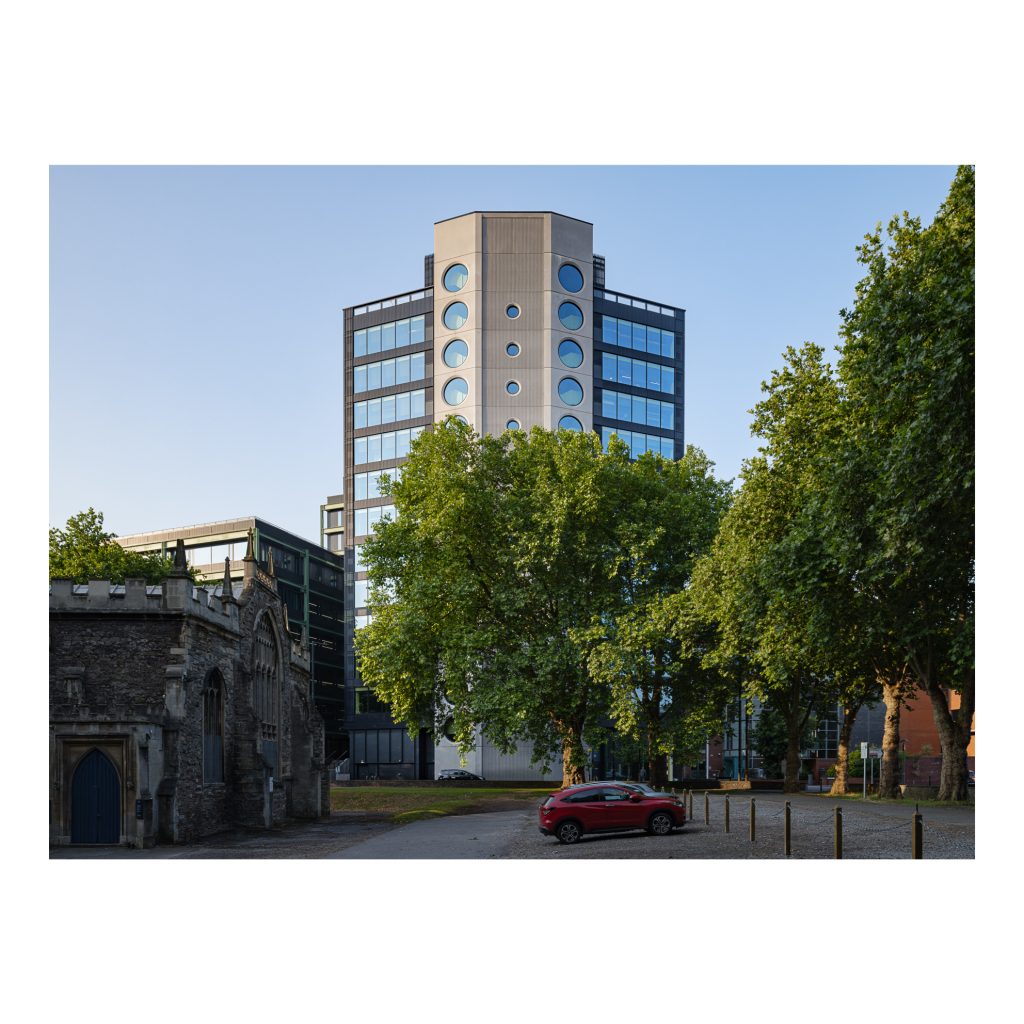
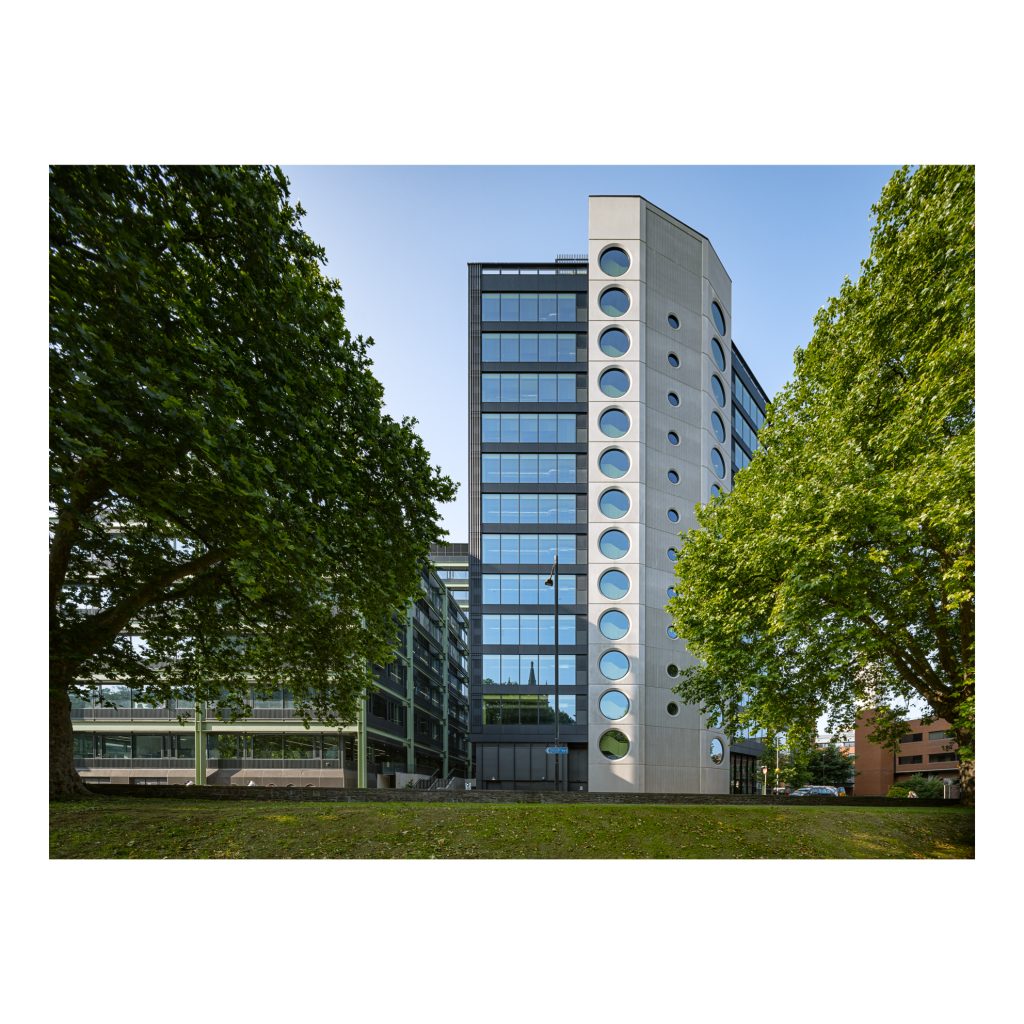
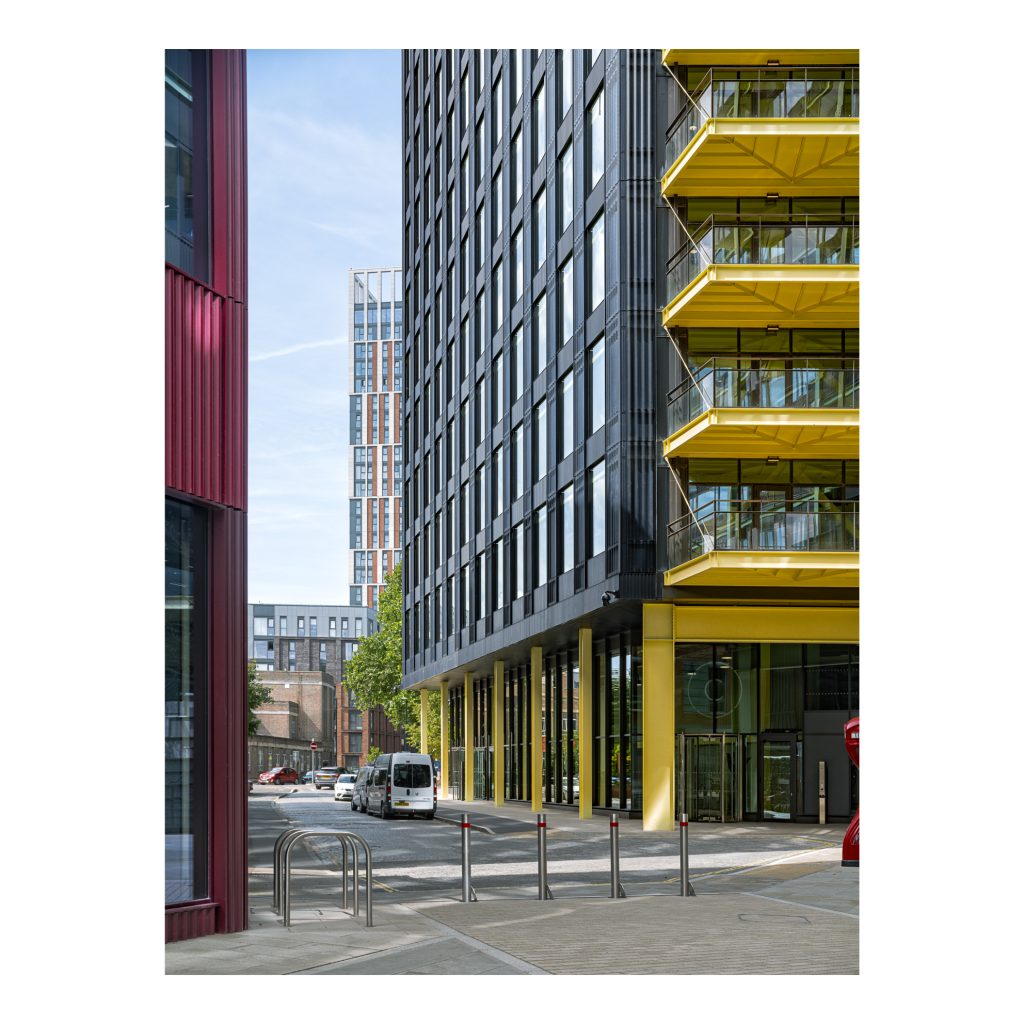
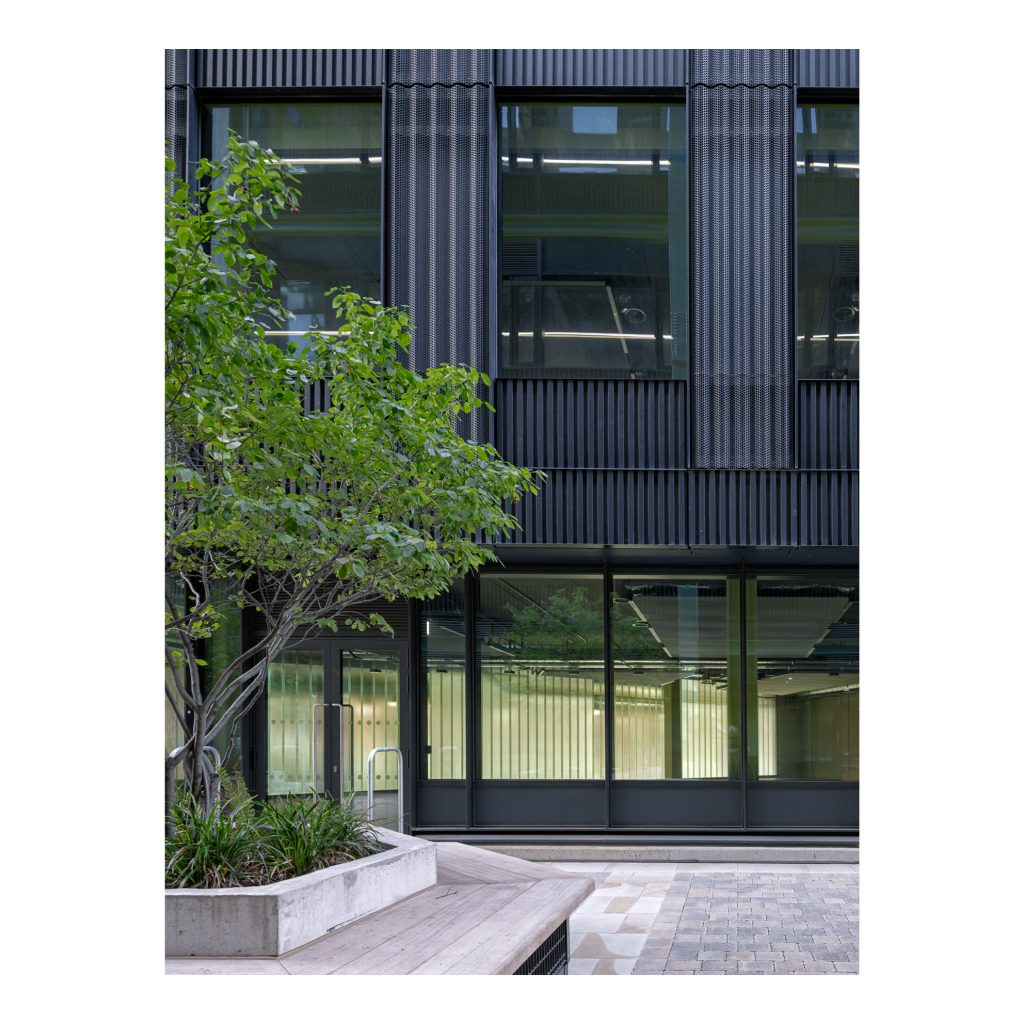
The site, formerly occupied by an inert, unlovely slab of 1970s office architecture, has thoughtfully reengineered to create a new business hub. A new composition of buildings has emerged not one monolith, but a family, light, generous, elegant, rising with deliberate asymmetry and sculpted care. This is not architecture shouting for attention, but a kind of structural choreography: forms that tilt towards the river, catch the sunlight, and respond to each other in kind.
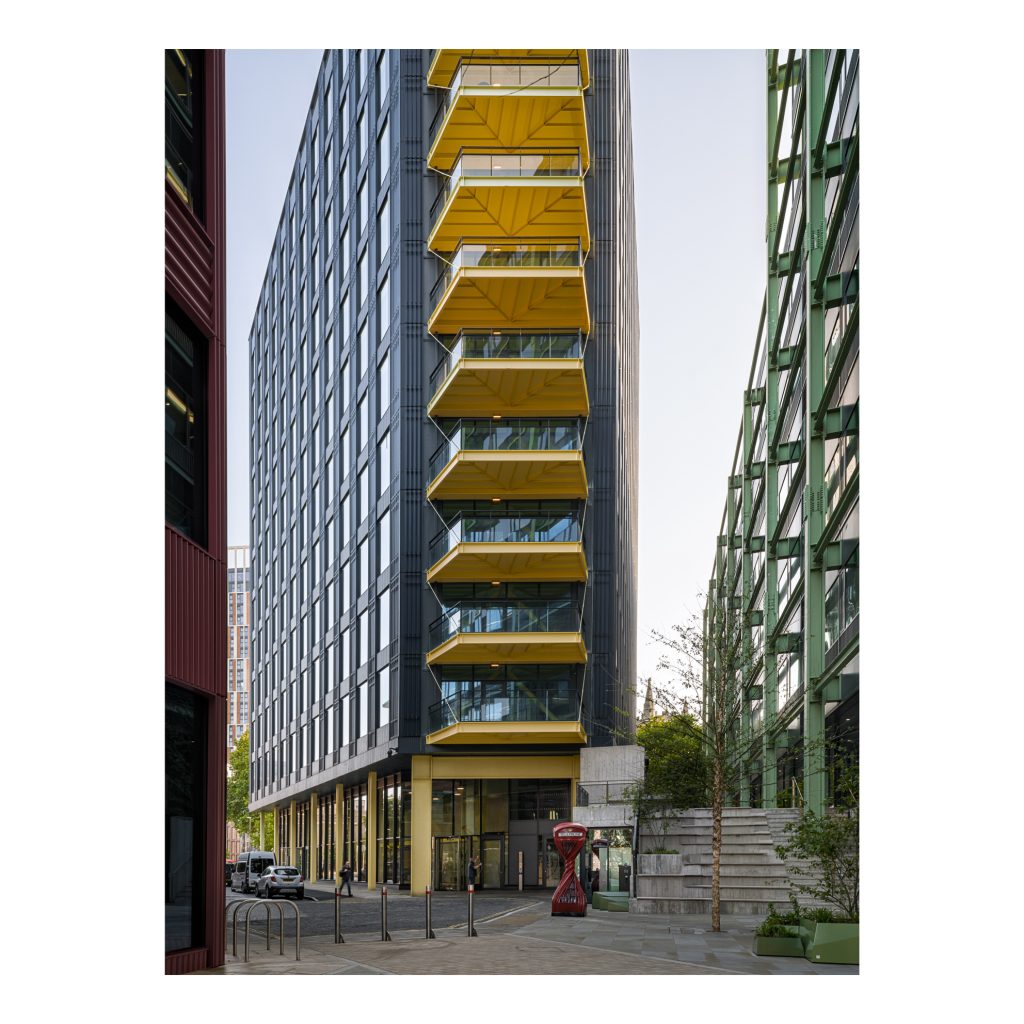
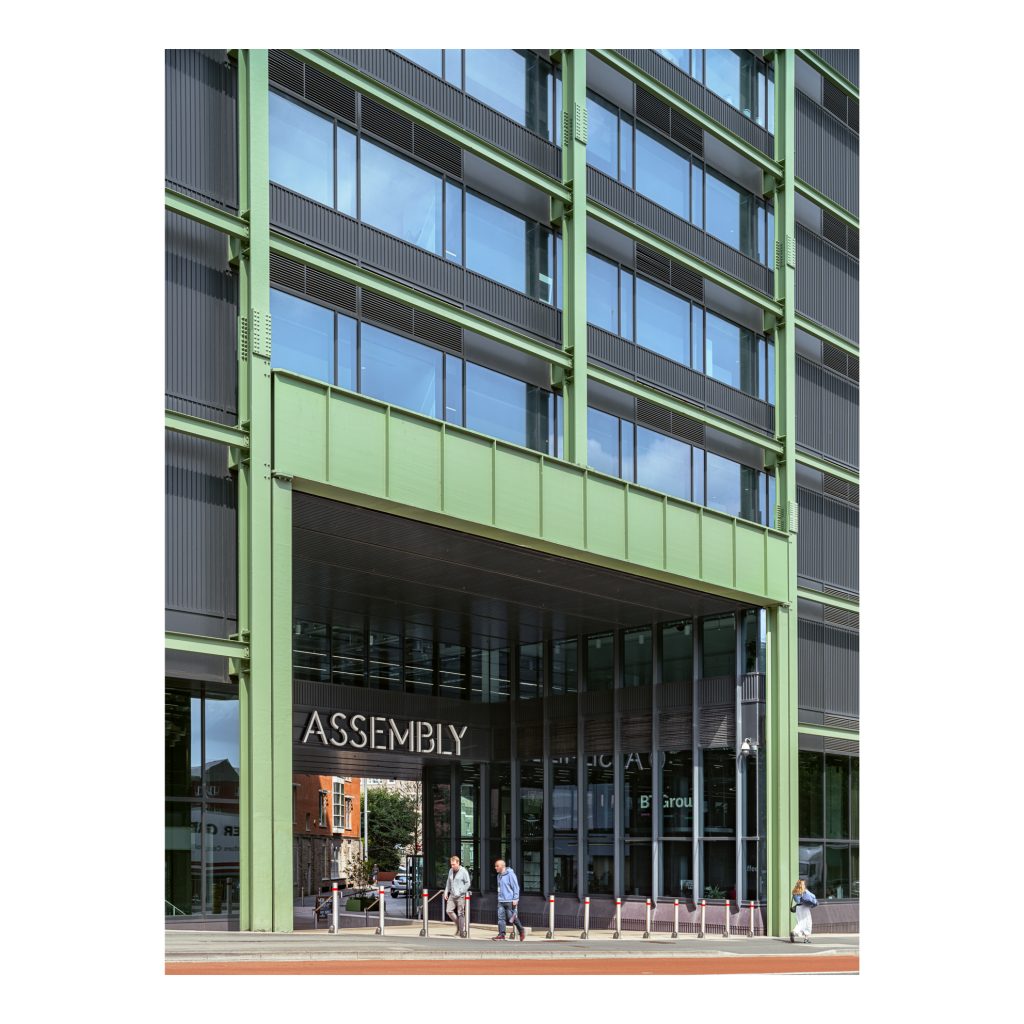
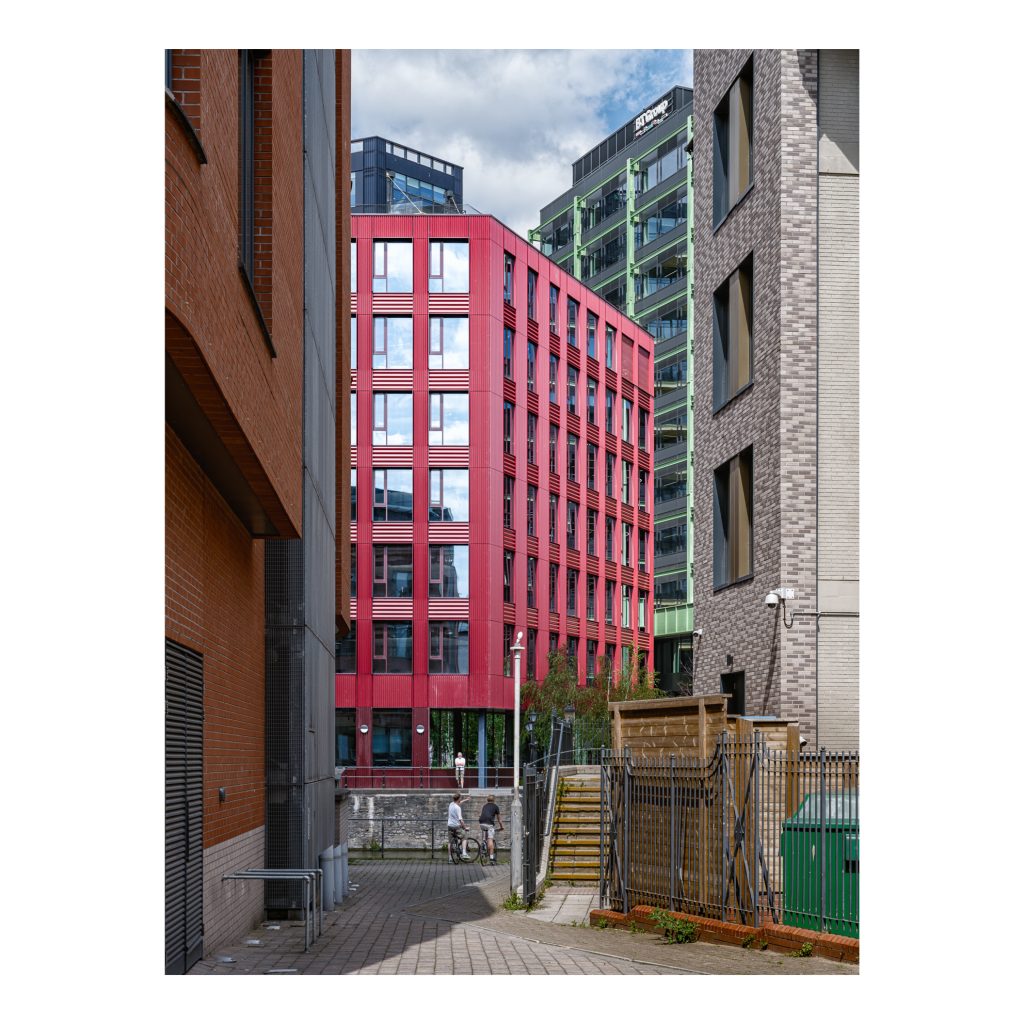
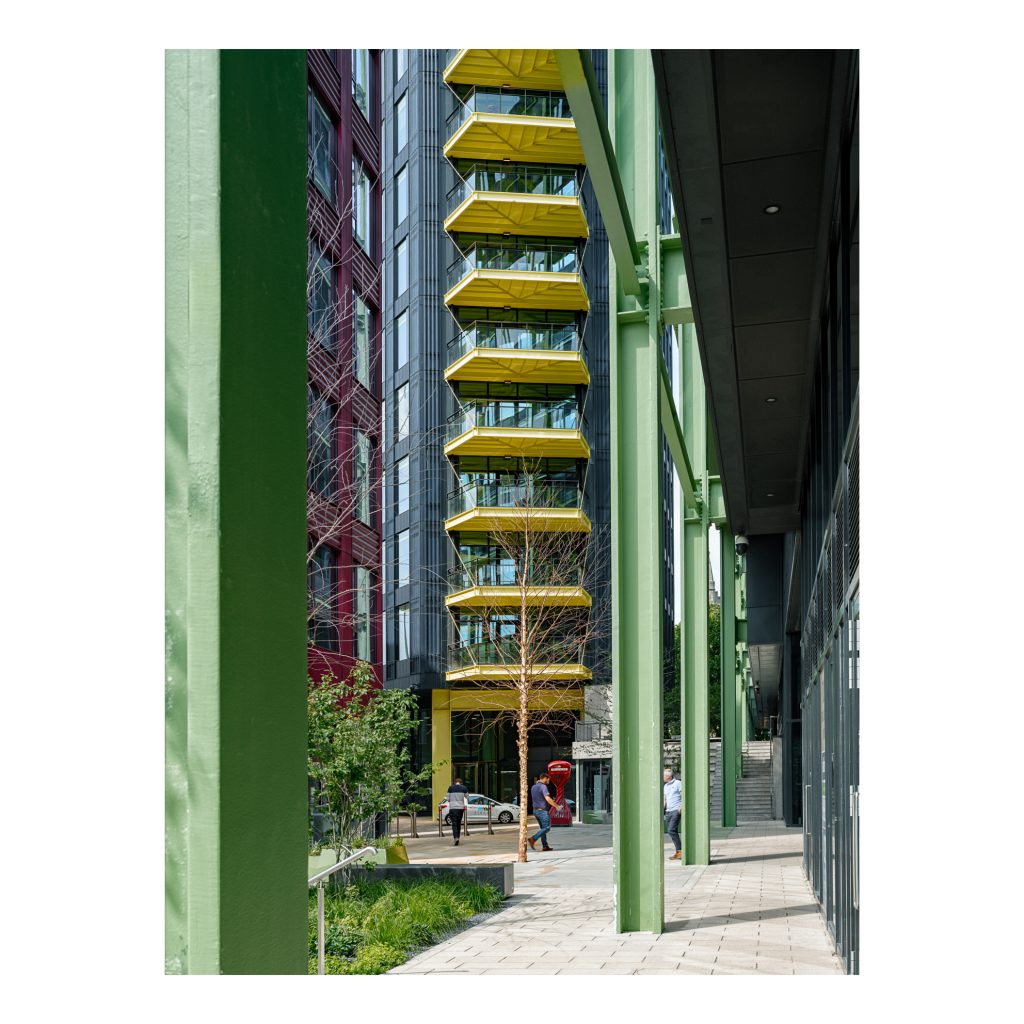
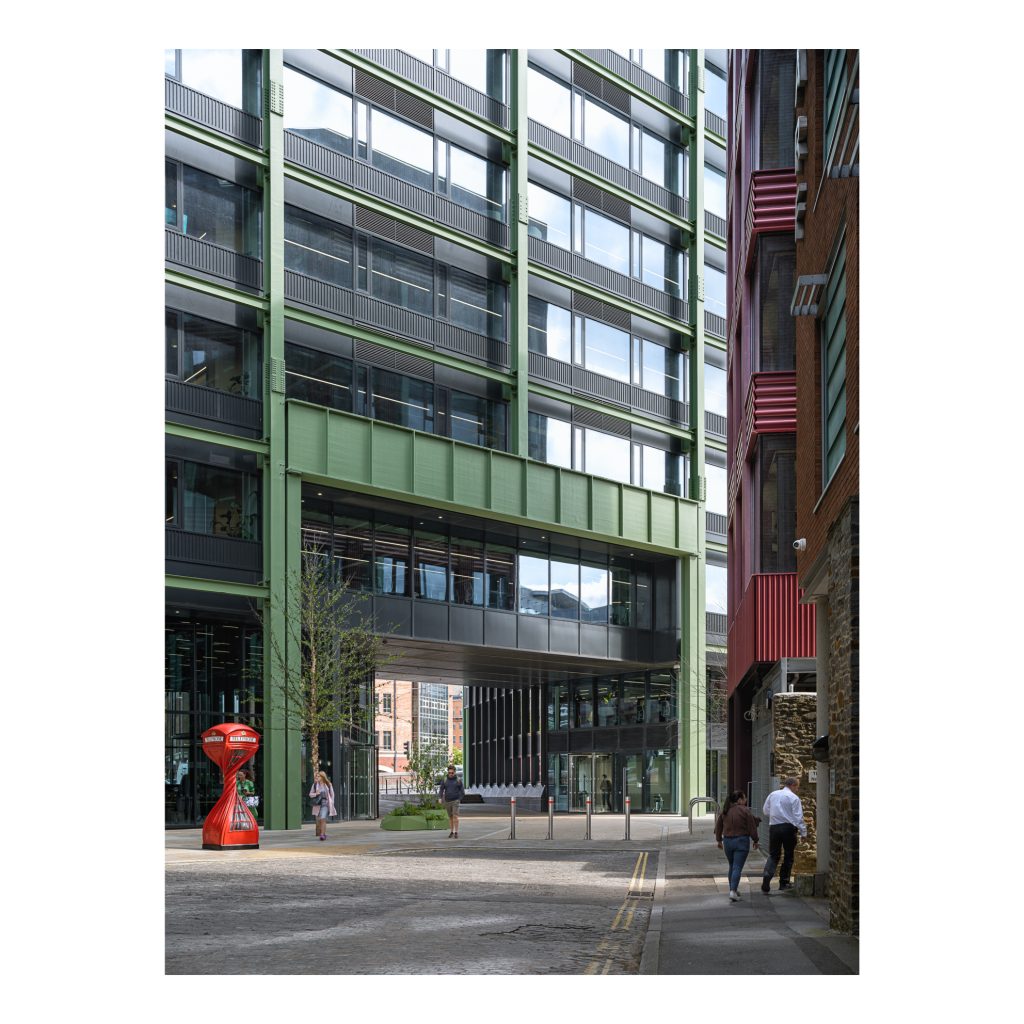
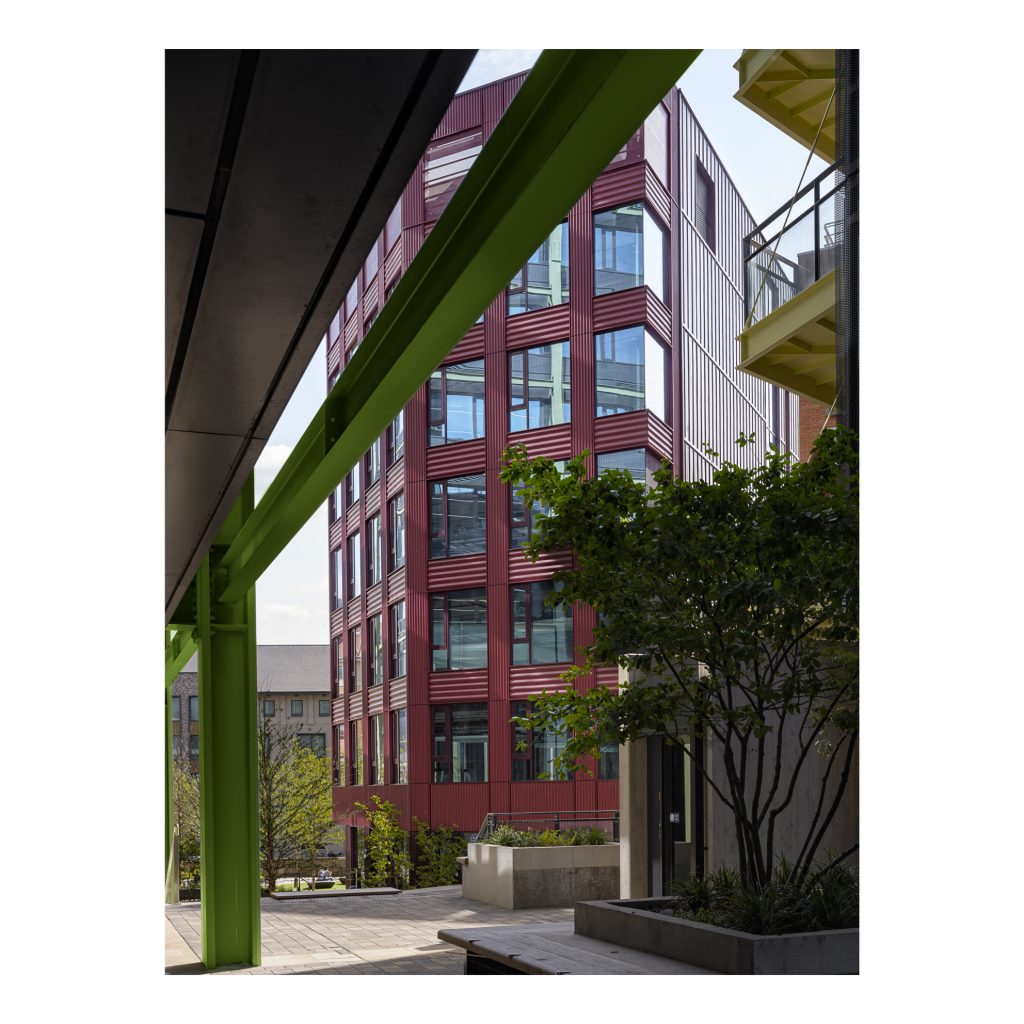
There is colour too, deliberate, rich, joyful. In this, the architects have reached back, not just to the canal-side optimism of the Victorian era, but to its often-forgotten chromatic boldness. We tend to think of Victorian buildings as sepia-toned relics. But look closely: cast iron railway stations in deep Brunswick green; signal boxes striped in saffron and crimson; pumping stations dressed in terracotta and cobalt. These were structures that didn’t apologise for their utility. They celebrated it.
There is something beautifully appropriate, then, in reviving that ethos here, on the edge of a reawakened harbour. The buildings act not as objects in space, but as anchors in a much larger urban narrative. They respect the grain of old street patterns, the accidental poetry of a city layered by centuries. New pedestrian routes stitch Castle Park back to Temple Meads, where once there were barriers. The waterside, once privatised by hoarding and scrubland, now opens as a democratic threshold, a place of encounter, of sunlight, of lunchtime sandwiches and conversation.
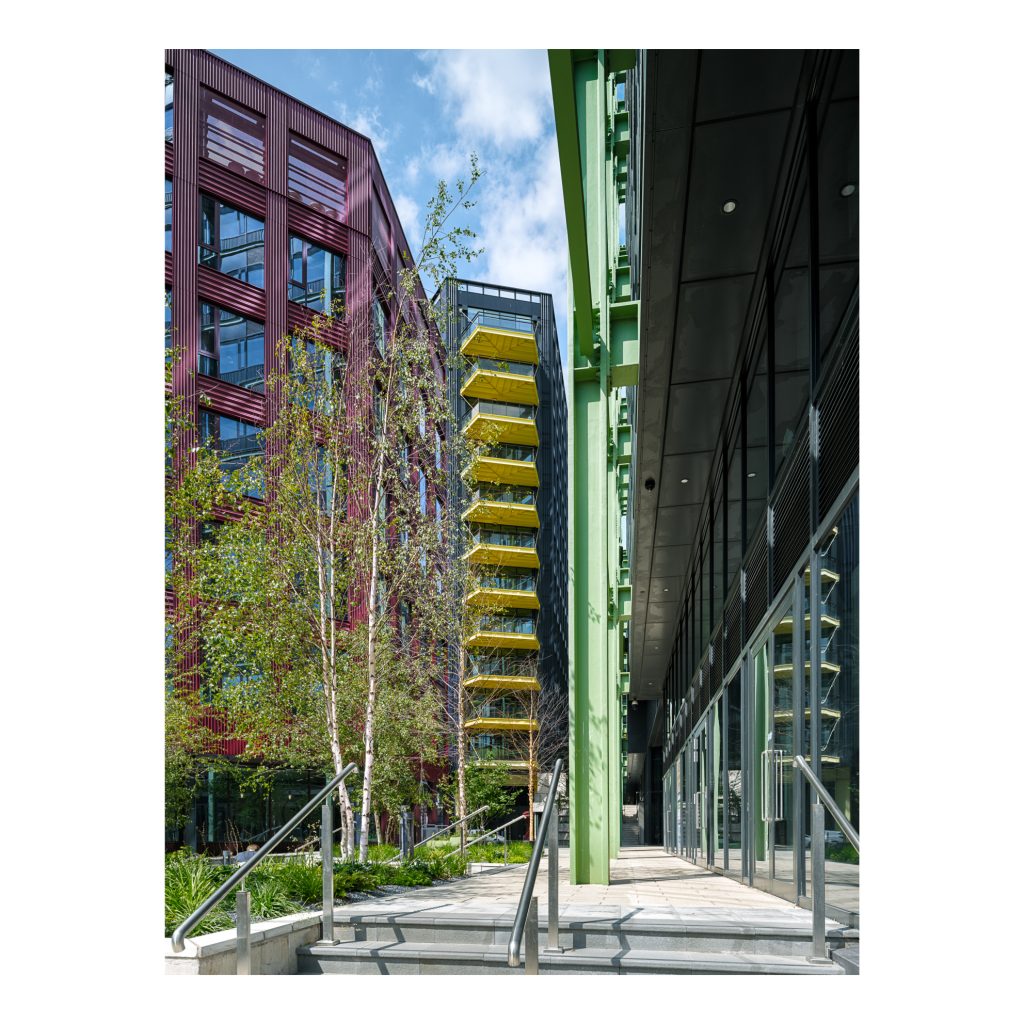
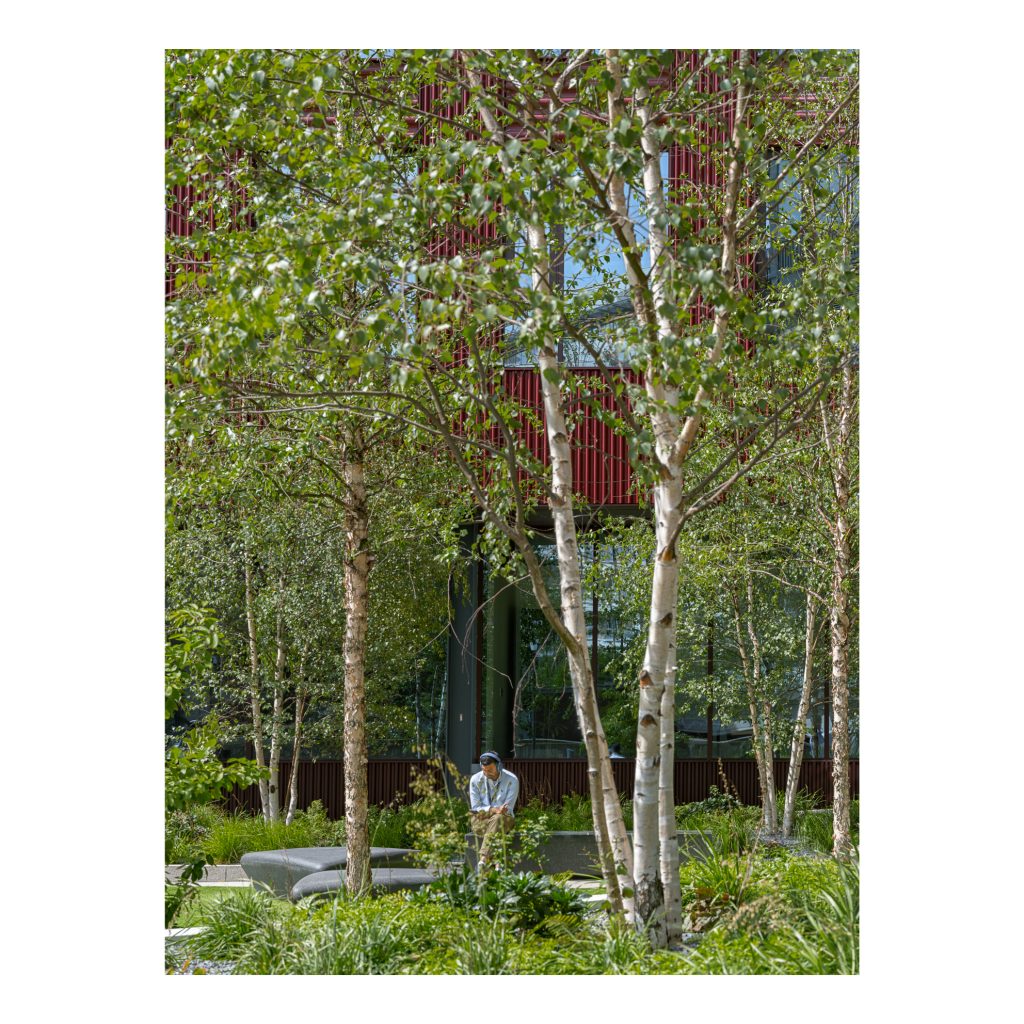
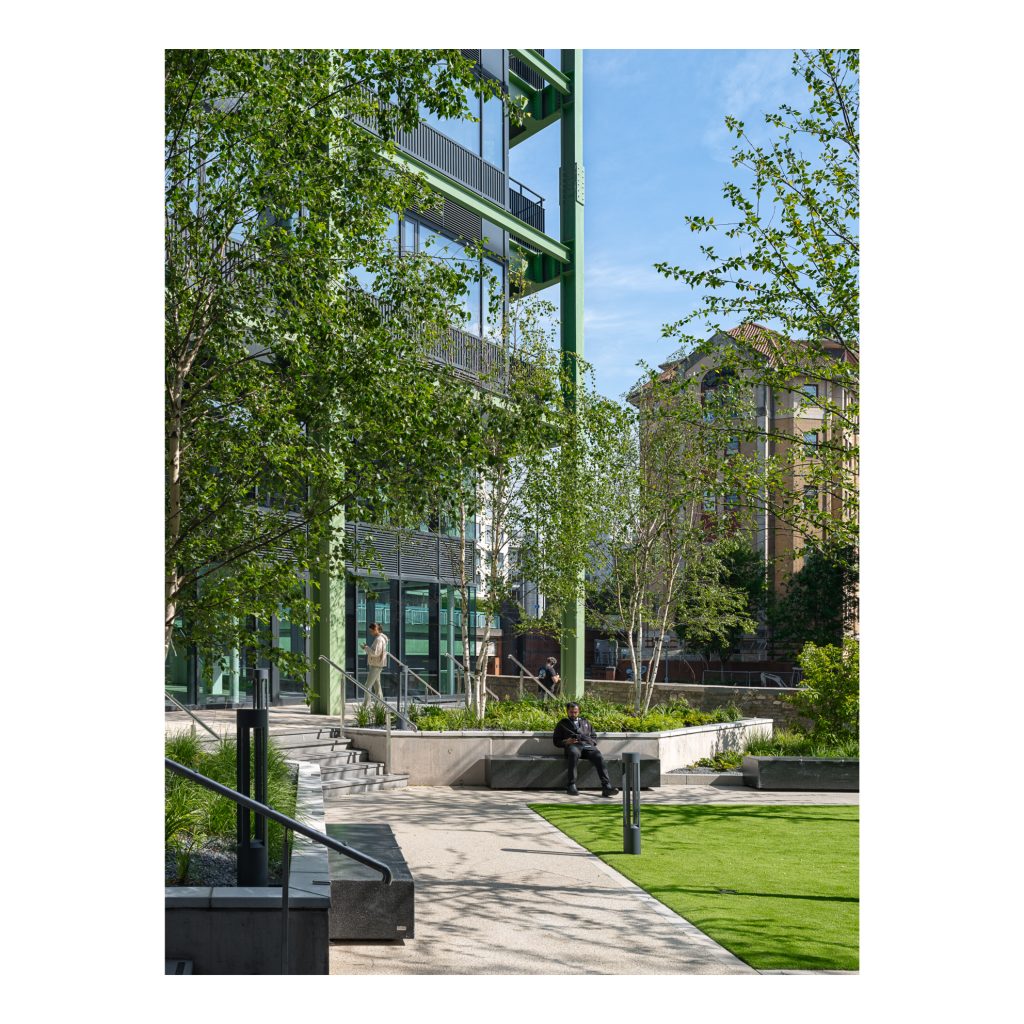
And here is the most generous move of all: not just building upwards, but giving space back to the city. The public square feels like a natural continuation of the historic quay. Trees have been planted creating shade and character. Routes are suggested, not dictated, enabling new rituals of walking and arrival. And along the edge, where once the architecture turned its back to the water, new frontages of retail and leisure open like windows to the city.
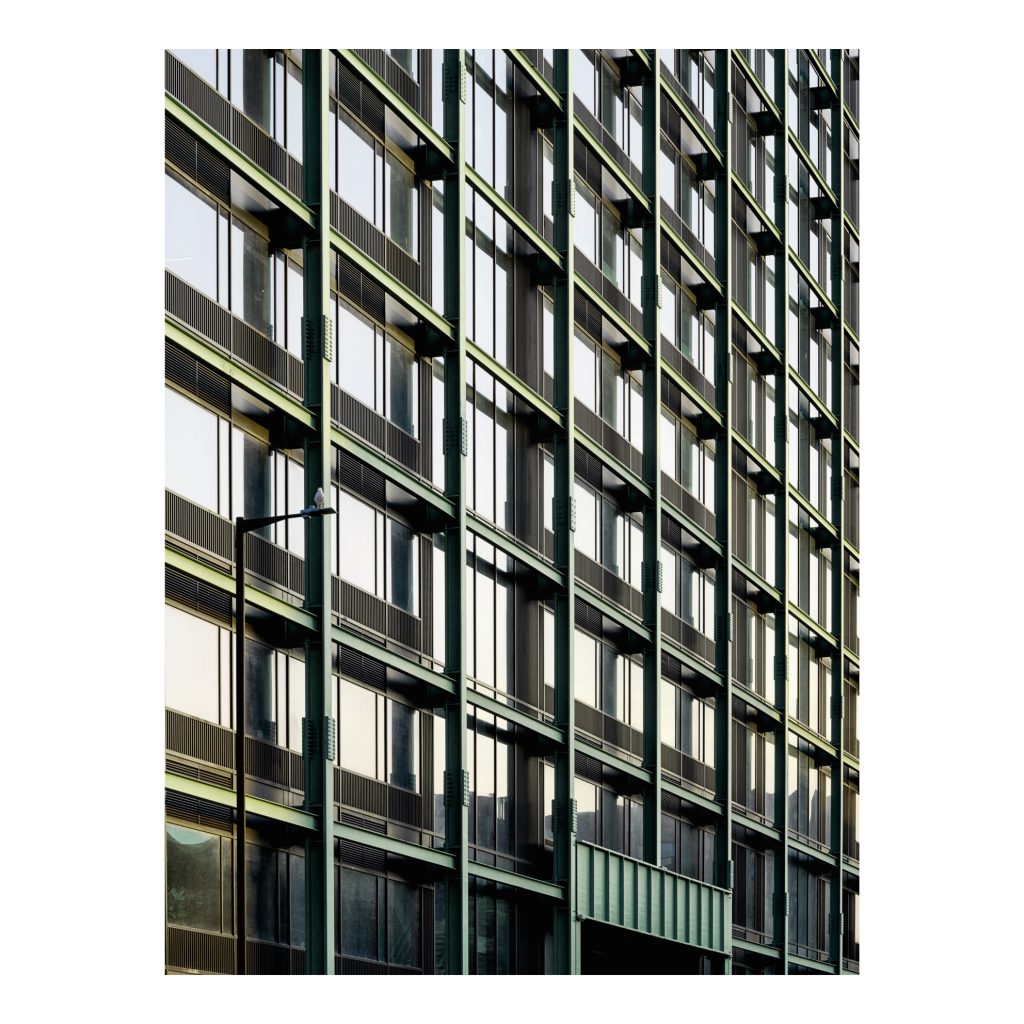
Photographing this place is not about finding a single iconic angle. It’s about tracing a new choreography of movement, reflection, and materiality. Colourful frames punctuate vistas, texture surfaces ripple and accentuate, stairways meander, softened by context. These are buildings aware of their surroundings, of the historic shot tower to the west, of Pip & Jay’s church to the north, and of the latent energy of the city all around them.
There is a quiet conviction in this project, a belief that the past isn’t an anchor, but a foundation. The industrial architects of the 19th century designed with a boldness born of civic pride. Their structures had scale, rhythm, and purpose. This new development echoes that confidence, a mature architect with a playful vision. It understands that Bristol’s Floating Harbour was never just about water. It was about transformation.
And transformation, here, has come again, ready for the ever evolving spirit of Bristol, a perpetual harbour of creative energy.